• About Me
  • Study Links

Renaissance Woman

~ Test All Things; Hold Fast What is Good-1 Thessalonians 5:21

Renaissance Woman

Author Archives: Kate

Because He Lives

04 Monday Oct 2021

Posted by Kate in Personal Essays, Writing

≈ Leave a comment

Tags

Anniversary, Christian Blog, Christian Life, Differently-Abled, Heart of the Father, Indwelling Spirit, Jesus Christ, Jesus is my Life, Journey with God, Living with Disability, Living with TBI, Strength for the Journey, Walking in the Way

Today, the Fourth of October, is the twenty-third anniversary of the car accident that left me differently-abled.  Since Post Day for the blog fell on Anniversary Day, I wanted to do something special.  I thought and thought and searched for the perfect words to say…what?  What do I know after twenty-three years of living differently-abled that will mean anything to anybody?

I recently read a quote by a spiritual leader whose writings I have read and admired in the past, something that made the quote so astonishing.  This leader was talking about us believers taking a carnal rather than a spiritual approach to our enemies and said our carnal approach could put us in a place where God cannot help us.  I don’t have the full context of this quote so perhaps I am interpreting these words in a way the writer never intended. However, I was struck by any leader saying we humans could end up in a place where God could not help us, regardless of the context.  I declare to you today such a statement is not true. I know Paul’s words are the truth: “For I am persuaded that neither death nor life, nor angels nor principalities nor powers, nor things present nor things to come, nor height nor depth, nor any other created things, shall be able to separate us from the love of God which is in Christ Jesus our Lord” (Romans 8:38-39). He is truly the One who keeps His promise never to leave nor forsake us and I know from experience we are never beyond His help.

At the time of the car accident, I was not living a life in Jesus Christ. I believed in Him certainly but, sick of the rules and regulations and a Father God I could not please no matter what, I had walked away from trying to live a Christian life. I was miserable, of course, but God never once let go of me.  In fact, He was with me the moment I woke up in that car after the accident.  His presence urged me to get out of the car and He was with me every step of the mile and a half journey I had to take to find help.  He was with me as I went away from rather than towards town and He was with me when I found the men who, by a remarkable coincidence, had postponed their fishing trip a week and were thus close by to get me to help and save my life. 

I didn’t die in my car accident and I know that isn’t the outcome for many. I lost a family member in an accident a few short months after my own. What about death? Isn’t that a sign that God didn’t help? That is not a subject that can be addressed in the limited space I have today but let me quote again that neither death nor life…shall be able to separate us from the love of God which is in Christ Jesus our Lord. I can tell you He was with me through this experience as well and I can assert along with Paul that death and the grave do not have the final word (1 Corinthians 15:55-57). We can trust Jesus even in these circumstances. He is the Living One and he holds the keys of death and hell (Revelation 1:18). (Note: while these passages have the words grave and hell respectively, the Greek word in both places is the same-hades [G86]).

But what about consequences, I can hear some asking.  We make our own choices and God doesn’t spare us the consequences of our actions.  We suffer from our own choices and we suffer because of the choices of others.  I don’t disagree.  I do disagree-utterly-with the idea that the choices we or anyone else make somehow thwarts God.  For a beautiful story of what God can do when others mean evil toward us and our sufferings do not stem from anything we did, read the story of Joseph related in Genesis Chapters 37-48.  But, what about situations like mine where, while it was an accident, I can’t deny I made my own choices. I have already shared how I did not put myself in a situation where not even God could help me, but there have been life changing consequences from this accident. What can I now hope for? I find reassurance in a story from Paul’s life in Chapters 20-23 of the Book of Acts.

I do wonder if this story doesn’t start in Chapter 18.  The end of verse 18 says, “He had his hair cut off at Cenchrea, for he had taken a vow.”  I’ve read various commentaries on just what this vow was and whether the cutting of the hair meant completion of the vow as such a completion usually meant the necessity of a sacrifice in Jerusalem.  I cannot say one way or another but this vow is something I can’t help but keep in mind as I read Chapters 20-23.  Paul is determined to get to Jerusalem for the Day of Pentecost (Acts 20:16) and nothing, not even the Holy Spirit Himself, is going to stop him. 

Paul states, “And see now I go bound in the spirit to Jerusalem, not knowing the things that will happen to me there, except that the Holy Spirit testifies in every city, saying that chains and tribulations await me.  But none of these things move me; nor do I count my life dear to myself…” 

The Holy Spirit spoke to Paul through another as well.  Chapter 21 relates how a prophet named Agabus comes down from Judea, takes Paul’s belt, binds his own hands and feet and says, “Thus says the Holy Spirit, so shall the Jews at Jerusalem bind the man who owns this belt and deliver him into the hands of the Gentiles” (verses 10-11).  Those with Paul plead with him to change his mind but he will not be persuaded.  I have to laugh a little when I read verse 14: “So when he would not be persuaded, we ceased, saying, “The will of the Lord be done.”  I do wonder just what they meant by that…

Paul goes to Jerusalem and everything happens exactly the way the Holy Spirit warned it would.  You can read the details of his time in Jerusalem and arrest through the rest of Chapter 21 and into Chapter 23.  And so…wouldn’t you think that disregarding warnings from THE HOLY SPIRIT would be a terrible sin?  Wouldn’t you think God would have no choice but to wash His hands of Paul and find someone else, someone more willing to be obedient?  Wouldn’t you think Paul’s choices had put him in a place where not even God could help him?

God doesn’t abandon him.  Verse 11 of Chapter 23 starts with “But”.  I always pay attention to the ‘buts’ I find in scripture and focus what came before.  Verse 10 says, “Now when there arose a great dissension, the commander, fearing lest Paul might be pulled to pieces by them, commanded the soldiers to go down and take him by force from among them, and bring him into the barracks.”  And then verse 11: “But…”

I spent some time between verses 10 and 11, imagining what Paul might be thinking and feeling.  He knew what to expect.  The Holy Spirit made clear what was going to happen if he chose to come to Jerusalem.  I wonder if Paul felt like a failure. I wonder if he was sure God would have to use someone else, someone less stubborn, more malleable.  I wonder if he had any hope of being used to proclaim the gospel of Jesus Christ ever again.  I wonder if he was overwhelmed with thoughts of “what if” and “if only”. I wonder all of this and then read verse 11: “BUT the following night the Lord stood by him and said, “Be of good cheer, Paul; for as you have testified for Me in Jerusalem, so you must also bear witness in Rome.”

What would Paul have been if he had heeded the warnings of the Holy Spirit and bypassed Jerusalem?  I think the question is worth asking but the answer really is “it doesn’t matter.”  The wonderful lesson I glean from this story is our choices cannot thwart the plan of God.  God was with Paul through his imprisonments and the things that happened to him as he was transferred from one place of incarceration to another.  And we have his letters, some written during these times of imprisonment, like the Epistle to the Philippians which bubbles over with the Joy of The Lord.

There’s a phrase, “You made your bed: now lie in it.”  What breaks my heart is when I hear the disdain in this phrase echoed in the words of Believers.  We ought to know better because we see Jesus.  If God, who is love, could possibly have in His heart the idea of “you made your bed: now lie in it”, He never would have given the promises of the One to come throughout the entire Old Testament and would have never given Jesus.  This is what I know.  I know He loves me and I know there is nothing I can ever do to stop Him loving me.  I know there is no mistake I can make He cannot redeem.  I know He is with me in this mess I have made of my life and that He is making it all work for good and for His purposes.  I know because Jesus lives, and lives in me through His Spirit, I can face whatever this life might hold.

Because He lives, I can face tomorrow

Because He lives, all fear is gone

Because I know, He holds the future,

And life is worth the living just because He lives. 

All scriptures are quoted from:

The New King James Version of The Holy Bible, Thomas Nelson, Inc., Nashville, Tennessee, 1982

Share this:

  • Print (Opens in new window) Print
  • Tweet
  • Email a link to a friend (Opens in new window) Email
  • Share on Tumblr
Like Loading...

Seasons

27 Monday Sep 2021

Posted by Kate in Poetry, Writing

≈ Leave a comment

Tags

Christ in Me, Christ Life, Heavenly Father, Holy Spirit, Indwelling Christ, Indwelling Spirit, Inspired Poetry, Poem, Poems, Poems about Jesus, Poetry, Spiritual Life

Seasons

You speak to me and bring forth Life
The hidden seed is quickening
My barren ground is thus transformed
As I burst forth in wondrous Spring

Summer comes with sudden storms
And brings intensifying heat
Both are necessary for
Without them fruit would not be sweet

Then comes the harvest time
The ripened fruit-it satisfies
Though what is reaped is bountiful
I anticipate darkening skies

My world turns dark and cold and gray
Impossible to bring forth fruit
But though it looks blanketed in death
Nothing quenches the Life in the Root

Seasons change-I know it’s time
I wait for fruit with burgeoning pride
But instead here comes the Husbandman
Branches are pruned and cast aside

My Father God, in You I trust
I cling to You through all this pain
I know You prune to increase fruit
Not one of these seasons are in vain

Bring me to that glorious day
When pruned and purged and purified
All I am images You
And You alone are glorified

Share this:

  • Print (Opens in new window) Print
  • Tweet
  • Email a link to a friend (Opens in new window) Email
  • Share on Tumblr
Like Loading...

Led as a Captive-Part Two

20 Monday Sep 2021

Posted by Kate in History

≈ Leave a comment

Tags

Ancient Rome, Christ in Me, Christ Life, Christ's Triumph, Christian Life, Holy Spirit, Indwelling Spirit, Jesus Christ, Kingdom Life, Kingdom Living, Kingdom of God, Roman Triumph

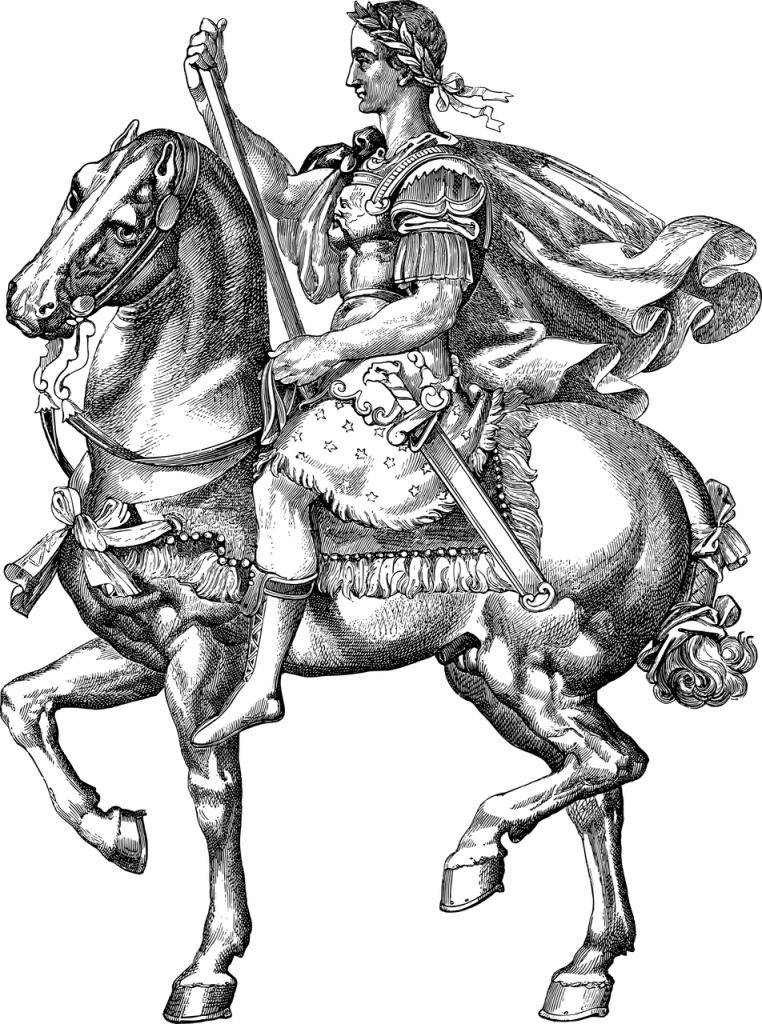
Image by Gordon Johnson from Pixabay

Hello Readers!  Welcome back to Renaissance Woman as, this week, I continue taking a look at Paul’s exuberant cry; “But thanks be to God, who always leads us as captives in Christ’s triumphal procession and uses us to spread the aroma of the knowledge of him everywhere” (2 Corinthians 2:14, NIV).  In last week’s post, I considered what Paul might be picturing here, assuming he had in mind a Roman Triumph.  This week, I want to consider why he was so joyful at the thought of being led a captive in Christ’s Triumphal Procession.

Before I get to that, there are a few more aspects of the Roman Triumph I have to bear in mind.  One is, after Rome ceased to be a Republic and became an Empire ruled over by Emperors, the Triumphs were reserved for Emperors alone.  I also bear in mind that the Emperors were called by the full title “Saviour of the World”.  The problems this caused for Christians within the Roman world is a fascinating subject but one I’ll have to leave for another time.  I mention it because it is Jesus Christ who alone deserves to bear the title “Saviour of the World” and it is He who is honored in this procession. We then, are led captive in the procession of the One who is the True King of the Universe and Saviour of the World.   

There is one more aspect of Roman Triumphs I took a look at during this study and that is The Ovation.  The Ovation was a lesser form of Triumph during which the general being honored rode on horseback.  When I read that, I pictured The Horseman described in Revelation 19: “Now I saw heaven opened, and behold, a white horse.  And He who sat on Him was called Faithful and True, and in righteousness He judges and makes war…And the armies in heaven, clothed in fine linen, white and clean, followed Him on white horses” (Verses 11 & 14, NKJV).  Here too, there is a procession but there are none led as captives.  Here, the Followers of Jesus are depicted as a mighty army. 

Considering what Paul says about us being led as captives and then the picture of the army in Revelation, can both be true of us as believers?  I think so, especially when I consider the promises found in scripture.  Consider, for instance 2 Corinthians 3:18 which says, “But we all, with unveiled face, beholding as in a mirror the glory of the Lord, are being transformed into the same image from glory to glory, just as by the Spirit of the Lord” (NKJV).  Consider also 2 Corinthians 5:21: “For He made Him who knew no sin to be sin for us, that we might become the righteousness of God in Him” (NKJV).  The words that hold my attention are “being transformed” and “become”.  There are so many other verses that speak of renewing, being made, being transformed: the conviction I am left with is one of process.  We do not become like Jesus overnight.  There is a process and, to use Paul’s words, it begins by being led captive by God.    

But what a strange captivity!  As I meditated on this, I was reminded of the young men led into captivity when Nebuchadnezzar sacked Jerusalem.  They were captives, certainly, but were brought to Babylon and trained in the literature, laws, and culture of Babylon. They were sent to university, in other words. It is here I see some similarities to our captivity in Christ as our Christian life is not one of servitude but one of being taught of the Lord by His Spirit.  Our captivity has one major difference from those young men in Babylon as our captivity is not forced on us but rather one we choose.  We are not drug through the streets in chains but drawn after Him with gentle cords and bands of love (Hosea 11:4, NKJV).  His goodness leads us to metanoia (I never get tired quoting that!), our eyes are opened to the reality of Jesus, and we surrender our lives to Him.  It is a captivity we continue to choose every time we pray “Thy Will Be Done.”  It is a captivity we choose every time we take our thoughts captive and make them obedient to Christ.

Here is also our warfare and it takes place on the battlefield of our mind.  However, just as our captivity is a strange captivity, so is our warfare.  It’s backwards because our General is already victorious.  He does not fight battles in order to become so.  He is the one who, through His death, resurrection, and ascension, utterly crushed the head of the serpent and destroyed the works of the devil (1 John 3:8).  Yet this victory must be worked out in us because there are strongholds, arguments, and high things that exalt themselves against the knowledge of God.  Foremost among these is that great lie that was spoken in the Garden of Eden: you shall be as God.  I did not realize when, in the awe and wonder of seeing who Jesus is I wanted nothing more than He should come and live in me, that war was being declared.  My Self was already crowned ruler of my life.  Self was my center and it believed it could be God apart from Him.  It resisted the rule of Jesus and battles ensued.

I think the best description of this warfare is in Romans 7: “For what I am doing, I do not understand.  For what I will to do, that I do not practice; but what I hate, that I do.  If, then, I do what I will not to do, I agree with the law that it is good.  But now, it is no longer I who do it, but sin that dwells in me.  For I know that in me (that is, in my flesh) nothing good dwells; for to will is present with me, but how to perform what is good I do not find.  For the good that I will to do, I do not do; but the evil I will not to do, that I practice….Oh wretched man that I am!  Who will deliver me from this body of death?  I thank God-through Jesus Christ our Lord!” (Verses 15-19, 24-25a, NKJV)

Paul goes on to say in Chapter Eight that, “Yet in all these things we are more than conquerors through Him who loved us” (Verse 37, NKJV).  This is true in Jesus right now and this is how I conduct my warfare.  I do not engage in battle at all but declare the battle is won.  Jesus Christ is victor now and unto the Ages of Ages.  I take up my cross daily realizing that it is no longer I who live but Christ who lives in me and there is nothing I will face that is too much for Him.  I listen for His voice and choose to be obedient to it, no matter how difficult doing so might be.  I surrender myself and go where He bids me go and stay where and when He bids me stay. 

Thanks be to God who always leads us as captives in Christ’s Triumphal Procession!  It can be painful because, as the captives in those Roman Triumphs of old, we know we will be jeered at by the spectators.  But, we also know He is using us to spread the aroma of the knowledge of Him everywhere. We can go forward lifting our hearts in songs of praise knowing our lives are hid in His.  We rejoice that the enmity of our carnal minds is defeated because the Spirit of the Living God lives in us.  We think it not strange that fiery trials come upon us because we know that when His glory is revealed, we will also be glad with exceeding joy (1 Peter 4: 12-13).  Indeed, we already rejoice because we know that, while we do not yet know what we shall be, we know that when He is revealed we shall be like Him for we shall see Him as He is (1 John 3:2).  We shout for joy because, even as we are led captives, we are the Children of God!

Hallelujah! Hallelujah!  Amen!

References:

NIV Journal The Word Bible, Zondervan, Grand Rapids, Michigan, 1973/2016

The Holy Bible, New King James Version, Thomas Nelson, Inc. Nashville, Tennessee, 1979/1982

Dando-Collins, Stephen, Legions of Rome: The Definitive History of Every Imperial Roman Legion, St. Martin’s Press, New York, New York, 2010, Pages 81-83

Guhl, E. & W. Koner, The Romans: Life and Customs, Konecky & Konecky, Old Saybrook, Connecticut, Pages 290-295

Matyszak, Philip, Legionary: The Roman Soldier’s Unofficial Manual, Thames and Hudson, London, UK, 2009, Page 183

“The Savior of the World” (John 4:42) on JSTOR   

Share this:

  • Print (Opens in new window) Print
  • Tweet
  • Email a link to a friend (Opens in new window) Email
  • Share on Tumblr
Like Loading...

Led as a Captive

13 Monday Sep 2021

Posted by Kate in History, Studies

≈ Leave a comment

Tags

Ancient History, Ancient Rome, Ancient World, Apostle Paul, Bible Study, History, Iron Kingdom, Paul's Epistles, Roman Triumph, Scripture, Search the Scriptures, The Bible and History

Image by Gordon Johnson from Pixabay

I have a NIV Journal the Word Bible which I find eminently useful.  The margins are wide and lined so I have plenty of space to note where the same Greek word has been translated by different English words or where the same English words in a passage are, in fact, different Greek words.  I recently opened it to 2 Corinthians 2 and read verse 14: “But thanks be to God, who always leads us as captives in Christ’s triumphal procession and uses us to spread the aroma of the knowledge of him everywhere”.  I was struck with the thought: “I bet Paul is referencing a Roman Triumph”.

There is always the chance he was not.  Most armies had some sort of celebration when returning triumphant from the battlefield.  There is a celebration recorded in 1 Samuel 18:  “Now it had happened as they were coming home, when David was returning from the slaughter of the Philistine, that the women had come out of all the cities of Israel, singing and dancing, to meet King Saul, with tambourines, with joy, and with musical instruments.  So the woman sang as they dance and said; “Saul has slain his thousands, and David his tens thousands” (verses 6 & 7).  The great carved scenes in Egypt portray the triumphant Pharaoh and captives in chains.  I am not prepared to say unequivocally that Paul is referencing specifically the Roman Triumph.

And yet, Paul was a Roman citizen (Acts 16:37-38, 25-28).  Unger’s Bible Dictionary states, “The character of a Roman citizen superseded all others before the law and in the general opinion of society, and placed him amid the aristocracy of any provisional town” and refers to Tarsus, the city of Paul’s birthplace, as “no mean city”.  As Paul, or Saul as he was then, would probably have been thirteen when he went to Jerusalem to take up his studies, I can’t say with any certainty that he would have ever visited Rome and seen a Triumph for himself.  However, Paul was extremely well read, showing familiarity with Greek authors (Acts 17:28), so I have no doubt he’d have been familiar with the details of a Roman Triumph.  Both The Passion Translation and The Archeological Study Bible suggest Paul was alluding to the Roman Triumph in their commentaries on this particular scripture.

Since it is a possibility, what word picture could Paul be painting by comparing believers to captives in a Triumphal procession?  What exactly did a Roman Triumph consist of?

Firstly, they were far more frequent during Rome’s Republic than during its Empire when only Emperors could hold them.  They were the highest honor awarded to a military commander but were thought to be the pinnacle of a political career as well.  There were rigorous criteria that had to be met before a Triumph could take place.  Philip Matyszak writes, “The most important of these are: 1: At least 5,000 enemy combatants must have perished in battle.  2: The battle must have brought the campaign to an end.  3: The campaign must have enhanced the majesty of the Roman empire”.

The senate had to vote to allow a Triumph and, once the afore mentioned criteria had been verified and a Triumph granted; Rome prepared for a party.  Streets and squares were festively adorned, temples were opened, decorated with flowers, and incense burned on the alters.  The commander gathered with his troops in the Campus Martius near the temples of Bellona and Apollo and then were met at the Porta Triumphalis-a gate used only for triumphal processions-by the senate, the city magistrates, and numerous citizens who took the lead of the procession, while lictors opened a way through the crowd.  Trumpet fanfares heralded the approach of the triumphant general.  The spectators would not see him yet.

The Military Commander or Emperor in later years would have sent on ahead the booty captured for the state and this consisted of armour, standards arranged as trophies, models of the cities or ships taken from the enemy, pictures of battles, tablets with the deeds of the victor inscribed on them, statues personifying the rivers and towns of the subjected country-all of which followed the city dignitaries and tibicines (flute-players) and would be carried by crowned soldiers at the points of long lances or on portable stands, or would be trundled through the streets on wheeled carts.  There would also be art, valuables like plate and vases, and gold and silver coins. 

There was human booty as well.  The survivors of the conquered army came in chains and were jeered at by the crowds and not just the surviving fighters: kings, princes, and other nobles were paraded through the streets.  The procession also contained sacrificial oxen who had their horns gilded accompanied by the priests, and then there were more singers, musicians, and dancers.

Finally, came the triumphant general himself.  He would be in a turret-like triumphal chariot with his male offspring accompanying him on horseback.  He would have a crown of gold and either have a laurel crown held over his head or be holding a branch of laurel taken from a grove planted by the emperor which would be planted again after the Triumph.  After the general came more musicians and representative cohorts of his triumphant legions. 

This would be a spectacular site, to be sure, but what could Paul mean by saying God leads us captive in Christ’s Triumphal Procession?  Captives did not fare well in a Roman Triumph.  Some were sold into slavery, some went to fight in the amphitheater, some were destined to imprisonment in the Mamertine prison, and some were strangled inside that prison at the foot of the Capitoline Mount.  There are a few instances of some (like the British King Caratacus) who were allowed to live out their days in Rome but still; it wasn’t a happy thing to be a captive in a Triumphal Procession.  Better to be one of the conquering army, marching in the Triumph of our great general to the cheers and accolades of all the inhabitants of the city.

Yet, Paul says we are led captive in Christ’s triumphal procession.  There is joy in Paul.  It can’t be missed.  He delights in doors being opened for him to teach in Troas but how he was troubled in his spirit because he could not find Titus there and so continued to Macedonia.  Then comes that cry, “But thanks be to God…!” (2 Corinthians 2:12-14).  What, if anything at all, can be gleaned from this passage?

God-willing, I will share what I have found next week.  Until then, the blessings of the Lord be upon you.

Amen.

References:

Archeological Study Bible, Zondervan, Grand Rapids, Michigan, 2005

NIV Journal The Word Bible, Zondervan, Grand Rapids, Michigan, 1973/2016

The Passion Translation, Broadstreet Publishing Group, LLC, 2018

Dando-Collins, Stephen, Legions of Rome: The Definitive History of Every Imperial Roman Legion, St. Martin’s Press, New York, New York, 2010, Pages 81-83

Guhl, E. & W. Koner, The Romans: Life and Customs, Konecky & Konecky, Old Saybrook, Connecticut, Pages 290-295

Matyszak, Philip, Legionary: The Roman Soldier’s Unofficial Manual, Thames & Hudson Ltd. London, 2009, Pages 183-185

Unger, Merrill R., Unger’s Bible Dictionary, Third Edition, Moody Press, Chicago, Illinois, 1957/1982, Page 831

Travels Through Greco-Roman Antiquity :: The Roman Triumph (villanova.edu)

The Roman Triumph – Spectacles in the Roman World (bccampus.ca)

Share this:

  • Print (Opens in new window) Print
  • Tweet
  • Email a link to a friend (Opens in new window) Email
  • Share on Tumblr
Like Loading...

Think God’s Thoughts

06 Monday Sep 2021

Posted by Kate in Studies

≈ Leave a comment

Tags

Bible Study, Biblical Greek, Christ in Me, Christ Life, Christian Life, Fellowship, Holy Spirit, Indwelling Spirit, Kingdom of God, Kingdom Within, Koine Greek, Mind of Christ, Taught of the Spirit, Unity

Photo by Walter Strong

Two weeks ago I posted on Philippians 2:5, the meaning of the Greek word translated “mind” in the passage, and the fact that several different Greek words have been translated “mind” throughout the New Testament.  Seeing this was so, my curiosity was piqued and I started looking at each of the different words and the passages in which they occur.  I did not get far in my study as I got a tad sidetracked in 2 Corinthians. 

But first things first.  A quick review: the Greek word translated “mind” in the Philippians passage is phroneo (G5426) and means briefly, “to exercise the mind, to have a sentiment or opinion, be mentally disposed.”  While I was considering this meaning as it fit in with Philippians 2:5, I wondered whether the Greek word was the same in Romans 8:7.

Romans 8:7 says, “Because the carnal mind is enmity against God; for it is not subject to the law of God, nor indeed can be.”  The word for “mind” here is in the same family.  It is phronema (G5427), means “mental inclination or purpose”, and comes from 5426. This is where my study on all the mind words got put on pause because I started thinking about the carnal mind being enmity against God, the battlefield of the mind, and 2 Corinthians 10:4-5.

2 Corinthians 10: 4-5 states, “For the weapons of our warfare are not carnal but mighty in God for pulling down strongholds, casting down arguments and every high thing that exalts itself against the knowledge of God, bringing every thought into captivity to the obedience of Christ”.  There is a lot said about the thought life in this passage but, rather than go into each Greek word here, let me share these verses from the Phillips translation: “The very weapons we use are not those of human warfare but powerful in God’s warfare for the destruction of the enemy’s strongholds.  Our battle is to bring down every deceptive fantasy and every imposing defense that men erect against the true knowledge of God.  We even fight to capture every thought until it acknowledges the authority of Christ.”

It was the words “knowledge of God” that caught my attention.  What does this mean?  Is this passage saying the knowledge of God, as in those things we can learn about Him; or is it saying the knowledge of God meaning knowledge that belongs to and comes from Him?  The difference is subtle but it is the difference in the direction of flow.  Does this knowledge of God originate in us or does it flow to us from Him?

I first sought to answer my question by looking at my Interlinear Greek-English Bible.  That work has the little word tou in the passage.  Tou, G5120 in the Strong’s Concordance, is a difficult word to study.  I’ve looked at it in a previous post and don’t remember if I shared the information I find in Volume One of my Koine Greek Textbook.  Allow me to do so now.  Under “of”, I find this statement: “This English word is translated from unrelated Greek words…Too many to list and no real value in word studies”.  I beg to differ, Greek Textbook.  Knowing whether or not the word translated “of” denotes possession is of paramount importance. 

Despite all my hopes, not one of the rest of the volumes offered up any more help.  Neither was the Strong’s Concordance all that helpful.  It does tell me that tou means “of this person-his”.  Thus, I can make a solid guess that the knowledge of God could also be translated as “God’s Knowledge” and I can also make the inference that this knowledge is something that flows from Him.

If this tiny word was all the foundation I have to base my belief on, it would be shaky indeed.  And so, I looked to other passages of scripture to see if I can find reference to knowledge that belongs to God but is graciously shared with us.  I found there are many and perhaps the one that speaks most directly to God sharing His knowledge with us is 1 Corinthians 2:9-16:

“But as it is written: ‘Eye has not seen, nor ear heard, Nor have entered into the heart of man the things which God has prepared for those who love Him.’* But God has revealed them to us through His Spirit.  For the Spirit searches all things, yes, the deep things of God.  For what man knows the things of a man except the spirit of the man which is in him?  Even so no one knows the things of God except the Spirit of God. 

“Now we have received, not the spirit of the world, but the Spirit who is from God, that we might know the things that have been freely given to us by God.  These things we also speak, not in words which man’s wisdom teaches but which the Holy Spirit teaches, comparing spiritual things with spiritual.  But the natural man does not receive the things of the Spirit of God, for they are foolishness to him; nor can he know them, because they are spiritually discerned.  But he who is spiritual judges all things, yet he himself is rightly judged by no one.  For ‘who has known the mind of the Lord that he may instruct Him?’** But we have the mind of Christ.”

The Greek word for “mind” here is neither phroneo nor phronema.  The Greek word here is nous (G3563).  It means “the intellect, mind, understanding” and the Strong’s entry says this word is “probably from the base of 1097”.  Whether it is or not, here is where I found the emergence of a fascinating pattern.  The words translated “know” in the entire passage are also different in the Greek (another study to pursue!) but the word “know” in “neither can he know them”-is the Greek word ginosko with the Strong’s number 1097.

During my search for passages of scripture on the knowledge of God, I remarked Matthew 11:27 (and Luke 10:22) which says, “All things are delivered unto Me of My Father, and no man knoweth the Son but the Father; neither knoweth any man the Father save the Son, and he to whomsoever the Son will reveal Him” (KJV).   “Knoweth” in this passage is epiginosko (G1921).  This word means “to know…recognize, to become fully acquainted with”.  It is a compound word made up of epi (G1909) and ginosko (G1097). The word for knowledge in my study phrase “knowledge of God” is gnosis (G1108).  It means “the act of knowing, knowledge, science” and is from 1097.

Ginosko (G1097) means “to know (absolutely)…allow, be aware of, feel, perceive, be resolved”.  There really isn’t anything within these definitions that are eye opening in and of themselves.  Rather, it was the pattern of ginosko threading its way through these passages.  As I traced that thread, I found I was tracing another that was giving me an answer to my question, namely; there was knowledge that belonged to God but which He was willing to give to us.

I love reading.  I love to study.  I love learning new things and the pursuit of knowledge occupies a great deal of my time.  I think study is good: God gave me a mind and expects me to use it.  In fact, I am to love Him with all my mind (Matthew 22: 37, Luke 10:27) and my studies are a necessary part of that.  I have many teachers I respect and am blessed to learn from.  However, true knowledge, the only knowledge that really matters, is that taught to me by the Holy Spirit.  1 John 2:27 tells me, “But the anointing which you have received from Him abides in you and you do not need that anyone teach you; but as the same anointing teaches you concerning all things, and is true, and is not a lie, and just as it has taught you, you will abide in Him.”

Jesus describes the Holy Spirit as teacher in John 14:26: “But the Helper, the Holy Spirit, whom the Father will send in My name, He will teach you all things, and bring to your remembrance all things I have said to you.”  And then, there is this description of the Holy Spirit from the Book of Isaiah: “The Spirit of the Lord shall rest upon Him, The Spirit of wisdom and understanding, The Spirit of council and might, The Spirit of knowledge and of the fear of the Lord” (Chapter 11 Verse 2).

The Spirit of the Lord has been given to me and that Spirit, while many things to me, is the Spirit of knowledge.  His teaching me all things flows from relationship rather than is an effect of study.  There have been many strongholds the enemy has built inside my mind that have needed demolishing, deceptive fantasies that have been consumed in Holy Spirit fire, and imposing defenses that have crumbled before the Word.  It is an ongoing battle to bring every one of my thoughts into captivity to Jesus Christ but, as I daily practice, I find it is possible to think His thoughts.

How beautiful!  The goodness of God brings me to metanoia and I gladly exchange my mind for His!  Amen and Amen!

*Isaiah 64:4  **Isaiah 40:13

Unless noted otherwise, all scriptures are quoted from The New King James Version of The Holy Bible, Thomas Nelson Inc., Nashville, Tennessee, 1982

Other References:

The Comparative Study Bible, The Zondervan Corporation, Grand Rapids, Michigan, 1984

The Interlinear Greek-English New Testament, Zondervan Publishing House, Grand Rapids, Michigan, Reprint 1970

The New Testament in Four Versions, Christianity Today, Inc., Washington D.C., 1965

Strong, James LL.D., S.T.D., The New Strong’s Exhaustive Concordance of The Bible, Thomas Nelson Publishers, Nashville, Tennessee, 1990

Walker, G. Allen, The New Koine Greek Textbook Volume 1-4, 2014-2018

Share this:

  • Print (Opens in new window) Print
  • Tweet
  • Email a link to a friend (Opens in new window) Email
  • Share on Tumblr
Like Loading...
← Older posts
Newer posts →

Categories

Featured Posts

Isaiah 45:7

When Tradition and I Part Ways

Keep reading
Kate's avatar by Kate November 28, 2022April 28, 2024
Gospel and Letters of John

A New Heart

Keep reading
Kate's avatar by Kate December 7, 2020March 14, 2021
Studies

The Way He Has Made

Keep reading
Kate's avatar by Kate August 7, 2023August 6, 2023

Enter your email address to subscribe to this blog and receive notifications of new posts by email.

Join 210 other subscribers
Follow Renaissance Woman on WordPress.com

Follow Me on Facebook

Follow Me on Facebook

Meta

  • Create account
  • Log in
  • Entries feed
  • Comments feed
  • WordPress.com

Blog at WordPress.com.

  • Subscribe Subscribed
    • Renaissance Woman
    • Join 169 other subscribers
    • Already have a WordPress.com account? Log in now.
    • Renaissance Woman
    • Subscribe Subscribed
    • Sign up
    • Log in
    • Report this content
    • View site in Reader
    • Manage subscriptions
    • Collapse this bar
 

Loading Comments...
 

You must be logged in to post a comment.

    %d