• About Me
  • Study Links

Renaissance Woman

~ Test All Things; Hold Fast What is Good-1 Thessalonians 5:21

Renaissance Woman

Tag Archives: Christian Living

Fruit of the Spirit-Love

22 Monday Mar 2021

Posted by Kate in Fruit of the Spirit, Studies

≈ Leave a comment

Tags

Agape, Bible Instruction, Bible Reference, Bible Study, Bible Truth, Biblical Greek, Christ in Me, Christian Life, Christian Living, Fruit of the Spirit, God is love, Indwelling Christ, Indwelling Spirit, Kingdom Truth, Love of God

“But the Fruit of the Spirit is love…” Galatians 5:22

As I began this study, I wondered whether or not there was intention behind the order in which the Fruit of the Spirit is listed.  Was Paul, because he listed love first, saying it’s the most important?  In his first letter to the Corinthians, Paul does say, “and now abide faith, hope, love, these three: but the greatest of these is love.” (1 Corinthians 13:13)   

While I was looking up the word “love” in my reference materials, I came across the following: “Love is the highest characteristic of God, the one attribute in which all others harmoniously blend.”1 I found I agreed as I considered the rest of the list in Galatians 5:22 & 23: the other Fruit of the Spirit were not a possibility without love and they did both blend with and flow out of love.  Perhaps Paul did deliberately list love first.

Jesus certainly considered love of highest importance.  He stressed its importance during the conversation that took place in the upper room.  “A new commandment I give to you, that you love one another; as I have loved you, that you also love one another.  By this all will know that you are My disciples, if you have love for one another.” (John 13:34-35)  “This is my commandment, that you love one another as I have loved you” and then again; “These things I command you, that you love one another” (John 15: 12 and 17, respectively).  What is this love He, and the writers of the New Testament, consider so important?

The Greek language does something I wish English did and that is it distinguishes between types of love.  There is eros or sexual love, there is storge for familial love or affection, there is philia to describe social love or friendship, philanthropia for a broader ethical sense of kindness and humanity, and then there is agape.2 While phileo (verb-John 16:27) and philanthropia (Titus 3:4) are used in connection with the love of God, it is agape (the noun) or agapeo (the verb) that are used most often.  Agape (G26) means love, affection, benevolence and agapeo (G25) means love in a social or moral sense. 

I don’t know about you, but these definitions from Strong’s Concordance don’t succeed in opening my eyes to the awesomeness of agape.  My reference materials do attempt to explain the meaning further.  Vine’s Expository Dictionary has “the characteristic word of Christianity…used to describe the attitude of God toward His son…the human race…and to such as believe on the Lord Jesus Christ…to convey His will to His children concerning their attitude toward one another…and toward all men…to express the essential nature of God.”3  The Hastings Dictionary says, “agape, signifying primarily a voluntary, active affection, has brought…into the NT the deeper sense of spiritual affection, the love that links God and man and unites soul and soul in the Divine communion.  Like philia, it implies reciprocity, fellowship,–if not existing, then desired and sought.”4 I liked the entry in Unger’s Bible Dictionary best: “We must derive our conceptions of God from the special revelation which he has given of Himself; and this declares His love as strongly as His existence.”5 I will come back to this in a moment.

1 John 4:8 states, “He who does not love (agapeo) does not know God for God is love (agape).  God is, in His very nature, love.  I have found value in reading the entries for love/agape in my reference materials but I find it is scripture itself that gives me the clearest picture of this love that God is.    

1 Corinthians 13 is one of the most spectacular passages in all of scripture. It explains agape. I cannot fathom why the translators of the King James Bible used “charity” to translate agape in this passage and yet translated it “love” elsewhere.  While other versions did make the correction back to “love”, I have heard this passage quoted with “charity” and I think that word sucks the vibrancy out of it. The passage is meant to be a joyous revelation of the very heart of God.  Let us take a look at it again keeping this in mind:

Love suffers long.  Love is kind.  Love does not envy.  Love does not parade itself.  Love is not puffed up.  Love does not behave rudely.  Love does not seek its own.  Love is not provoked.  Love thinks no evil.  Love does not rejoice in iniquity but rejoices in the truth.  Love bears all things.  Love believes all things.  Love hopes all things.  Love endures all things.  Love never fails. 

Again, “We must derive our conceptions of God from the special revelation which he has given of Himself; and this declares His love as strongly as His existence.” “Love had its perfect expression among men in the Lord Jesus Christ.”6 “He (Jesus) is the image of the invisible God” (Colossians 1:15).  There are so many more commentaries, expositions, and scriptures I could quote if I had space.  I hope these few are enough for each one of us to see that perfect love that God is has been made manifest to us in His Son.  That love is the same love with which we are commanded to love each other.  Is this a burden placed upon us believers?  Are we to strive to love like Him and hope we don’t fall short?  Of course not!

The word “commandment” in the passages I quoted earlier is a fascinating one.  It is entole (G1785) meaning injunction, authoritative prescription, commandment, precept.  Entole comes from entellomai (G1781) which means enjoin, give charge, give commandments, injoin.  Entellomai can be broken down into its components and here’s where it gets extremely interesting.  I haven’t got the space to share the definitions in their entirety so I encourage you to look them up for yourself.  Briefly, the meanings are these:

En (G1722) denoting fixed position in place, time, or state…instrumentality…a relation of rest…give self wholly to

Telos (G5056) to set out for a definite point of goal, the conclusion of an act or a state, ultimate or prophetic purpose, an impost or levy (as paid)

Do you see it?  The onus isn’t on us at all except as it relates to our keeping ourselves in Him, entering into His rest, and remaining in vital relationship with Him through His Spirit!  God so LOVED-AGAPEO-the world that He gave His son and Jesus has done it all!  He is the One who has ascended far above all heavens that He might fill all things! (Ephesians 4:10)  We who hope to love as Jesus did know we can do so, not in our own strength but because “the love (agape) of God has been poured out into our hearts by the Holy Spirit who was given to us.” (Romans 5:5)  It is His Spirit in us that bears fruit and the beginning of this fruit is His love.

  1. Unger, Merrill, F., Unger’s Bible Dictionary, Third Edition, Moody Press, Chicago, Illinois, 1982, Page 668
  2. Hastings, James, Hastings Dictionary of the Bible, Fifth Printing, Hendrickson Publishers, USA, 2001, Page 555
  3. Vine, W.E., Vine’s Expository Dictionary of Old and New Testament Words, Thomas Nelson, Inc., Nashville, Tennessee, 1997, Pages 692-693
  4. Hastings, James, Hastings Dictionary of the Bible, Hendrickson Publishers, USA, 2001, Page 555
  5. Unger, Merrill, F., Unger’s Bible Dictionary, Third Edition, Moody Press, Chicago, Illinois, 1982, Page 668
  6. Vine, W.E., Vine’s Expository Dictionary of Old and New Testament Words, Thomas Nelson, Inc., Nashville, Tennessee, 1997, Page 693

Other References: The Comparitive Study Bible, Zondervan, 1984; The New King James Version of the Holy Bible, Thomas Nelson Publishers, 1982; The New Strong’s Exhaustive Concordance of the Bible, Thomas Nelson Publishers, 1990


Share this:

  • Click to print (Opens in new window) Print
  • Tweet
  • Click to email a link to a friend (Opens in new window) Email
  • Share on Tumblr
Like Loading...

Identity

08 Monday Mar 2021

Posted by Kate in Poetry, Writing

≈ 2 Comments

Tags

Christ in Me, Christ Life, Christian Blog, Christian Life, Christian Living, Christian Poetry, Indwelling Christ, Indwelling Spirit, Inspired Poetry, Life in Christ, Peace, Poem, Poet, Poetry, Walking in the Way

I was thinking how often I say “I Am” and then say something negative about myself. By doing so, I am creating my own existence for “As a man (woman in this case) thinks in his (her) heart, so is he (she).” Proverbs 23:7. I am changing that habit and striving to say what My Heavenly Father says about me whenever the words “I Am” come out of my mouth. While trying to put my thoughts in order, I wrote the following poem:

Identity

A thousand voices call to me

Demanding that I hear

The words they speak into me

And I cannot but draw near-

I hear them clearly now I’m close

And their words make my heart sink

“We alone know what is true:

We will tell you what to think.”

A thousand voices seek for me

They call me left and right

Demanding I align with them

With what they say is right

I cannot escape from them

Though I’ve run so very far-

“You cannot know yourself,” they say

“We will show you who you are.”

One Voice cuts through all the noise

The pressures, the demands

Bringing silence, bringing peace

Assuring me He understands

The burdens I have carried

As I’ve struggled to define

Just who I am in this world-

His Voice says “You are mine.”

“I Am,” He says, “All that I Am,

I Am Always Ever Now

All that I Am is for you

Let me show you how

My life is lived inside of yours

I in you and you in Me

You dwell inside my light

I Am your identity.”

Share this:

  • Click to print (Opens in new window) Print
  • Tweet
  • Click to email a link to a friend (Opens in new window) Email
  • Share on Tumblr
Like Loading...

Testing the Fruit

01 Monday Mar 2021

Posted by Kate in Walking in the Way

≈ 1 Comment

Tags

Bearing Fruit, Bearing Good Fruit, Bible Instruction, Bible Living, Bible Study, Bible Truth, Biblical Greek, Christ Life, Christian Living, False Prophets, Fruit of the Spirit, Indwelling Christ, Indwelling Spirit, Koine Greek

Photo by Kai-Chieh Chan from Pexels

This week, I find myself still in 1 John 4.  Specifically, his admonition in verse 1: “Beloved, do not believe every spirit, but test the spirits, whether they are of God; because many false prophets have gone out into the world.”  I have seen stories of those claiming to be prophets and/or claiming to have received prophetic messages from God.  Statements made by these prophets have since turned out to be untrue.  No doubt I need look no further to see what John meant by false prophets. 

Here is where I find study important when I am attempting to understand scripture.  I bring whatever I believe a word means to scripture when I read it and this can be dangerous when I thus interpret the meaning of a passage.  Whenever I read the word “prophet” I know that means “someone who says what God is going to do in the future”.  A modern day prophet is someone like the Old Testament prophets but better because that person is (ought to be) spirit-filled.  Or, at least I assume I know because that’s how the word has been used and is thus the definition foremost in my mind when I read scripture but; is that really what the word means?  It is important to me that I know and so I turn to my Strong’s Concordance.

The Greek word translated “false prophet” is pseudoprophetes (S5578).  What’s cool about studying Greek is the words can be broken into parts and their meanings looked at.  Pseudoprophetes can be split into pseudes which means “untrue, i.e. erroneous, deceitful, wicked–false, liar” and prophetes (S4396) which, while it does mean “a foreteller (“Prophet”)” it also means “An inspired speaker, a poet;-prophet”.  Prophetes can be split into its parts of pro (S4253) and phemi (S5346).  Pro means “fore, i.e. in front of, prior to” and phemi means “to show or make known one’s thoughts”.  My trusty Vine’s Expository Dictionary has: “PROPHETES, one who speaks forth or openly, A), a proclaimer of a divine message…one to whom and through whom God speaks.”1  With just this bit of study, I see that a prophet can be but is not necessarily someone who foretells the purposes of God in the future.  Rather, anyone who stands up and claims to be speaking on behalf of God is a prophet which would include any teacher, pastor, writer, etc. 

I see this is so when I look at Hebrews 1:1-2 and Revelation 19:10.  The Hebrews passage says, “God, who at various times and in various ways spoke in time past to the fathers by the prophets, has in these last days spoken to us by His Son, whom He has appointed heir of all things, through whom also He made the worlds” and the Revelation passage says, “…for the testimony of Jesus is the spirit of prophecy.”  It bears repeating: God speaking by His Son and the testimony of Jesus is the spirit of prophecy.  To me, these scriptures say it isn’t just a prophet’s declaration of the future I need to be testing but also I need to be testing whatever is said by anyone claiming to speak on the word of God.  I sincerely hope my words are being subjected to the same test.  What test?

 For further clarification, I turn to the words of Jesus Himself.

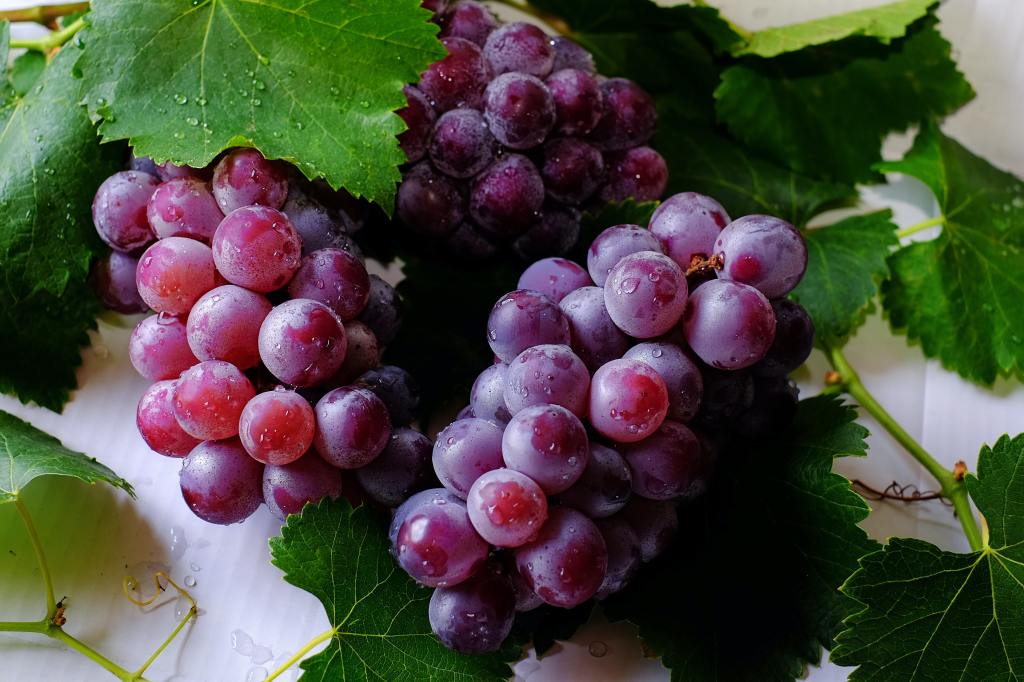
In Matthew 7: 15-20, Jesus warns to beware of false prophets.  He says “you will know them by their fruits” in verse 16 and says it again in verse 20: “Therefore by their fruits you will know them.”  Jesus speaks about two kinds of fruit in this small passage.  “Do men gather grapes from thorn bushes or figs from thistles?” He asks and then continues, “Even so, every good tree bears good fruit, but a bad tree bears bad fruit…every tree that does not bear good fruit is cut down and thrown into the fire” (Matthew 7:16-17, 19).

How can there be both good fruit and bad fruit?  In the parable of the Vine and the branches recorded in the 15th chapter of John’s Gospel Jesus says, “As the branch cannot bear fruit of itself, unless it abides in the vine, neither can you, unless you aide in Me.”  To me, this says there’s fruit and no fruit, not good fruit and bad fruit.  Does Jesus contradict Himself?  Can both passages be true?

I find my answer to that is yes but only when I consider the life that flows from the vine to the branch in terms of the Holy Spirit.  There is Jesus and there is Me.  We are separate in a sense (We can’t ever be truly separate as in Him all things hold together as described in Colossians 1:17.  That’s a vast subject I don’t have space to address here).  And yet, His life is my life because His Spirit lives in me.  I am only aware of His life in me because the Spirit reveals it to me.  This is true of every believer so how can a believer bear bad fruit?  When I return to Matthew 7, Jesus says “I will declare to them, ‘I never knew you’.” (Verse 23). 

Intimacy with Jesus Christ is the answer.  When I realize I abide in Him, that apart from Him I can do nothing, that I need the flow of His Spirit every moment of my life, the fruit I bear will be good fruit.  If that flow is stifled or diminished somehow, I would still bear fruit but it would be shriveled, tasteless, perhaps rotten fruit.  I wonder if this is what the Apostle Paul meant when he said “do not quench the Spirit” in 1 Thessalonians 5:19. 

In the very next verse Paul says, “Do not despise prophecies.”  Prophecies are important.  Teachers of the Word are important.  Knowing the difference between good fruit and bad fruit is important.  Galatians 5: 22-23 tells me what the fruit of the Spirit is, “love, joy, peace, longsuffering, kindness, goodness, faithfulness, gentleness, self-control.”  Here is an entire list of Spirit fruit I can taste for myself, savor, become familiar with as they become part of me.  It’s only by tasting the good fruit that comes from a life in the Spirit that I can recognize the taste of the bad fruit when it is served up to me.

  1. Vine, W.E., Vine’s Expository Dictionary of Old and New Testament Words, Thomas Nelson Inc., Nashville, Tennessee, 1997, Prophet, Page 894

Share this:

  • Click to print (Opens in new window) Print
  • Tweet
  • Click to email a link to a friend (Opens in new window) Email
  • Share on Tumblr
Like Loading...
Newer posts →

Categories

Featured Posts

Isaiah 45:7

When Tradition and I Part Ways

Keep reading
Kate's avatar by Kate November 28, 2022April 28, 2024
Gospel and Letters of John

A New Heart

Keep reading
Kate's avatar by Kate December 7, 2020March 14, 2021
Studies

The Way He Has Made

Keep reading
Kate's avatar by Kate August 7, 2023August 6, 2023

Enter your email address to subscribe to this blog and receive notifications of new posts by email.

Join 210 other subscribers
Follow Renaissance Woman on WordPress.com

Follow Me on Facebook

Follow Me on Facebook

Meta

  • Create account
  • Log in
  • Entries feed
  • Comments feed
  • WordPress.com

Blog at WordPress.com.

  • Subscribe Subscribed
    • Renaissance Woman
    • Join 169 other subscribers
    • Already have a WordPress.com account? Log in now.
    • Renaissance Woman
    • Subscribe Subscribed
    • Sign up
    • Log in
    • Report this content
    • View site in Reader
    • Manage subscriptions
    • Collapse this bar
 

Loading Comments...
 

You must be logged in to post a comment.

    %d