• About Me
  • Study Links

Renaissance Woman

~ Test All Things; Hold Fast What is Good-1 Thessalonians 5:21

Renaissance Woman

Tag Archives: Koine Greek

Joy and Grace

02 Monday Aug 2021

Posted by Kate in Fruit of the Spirit, Studies, Walking in the Way

≈ Leave a comment

Tags

Bible Study, Biblical Greek, Christ in Me, Christ Life, Christian Life, Fruit of the Spirit, Grace of God, Heart of God, Holy Spirit, Indwelling Spirit, Joy of God, Koine Greek

A few weeks ago, one of the teachers at the church I attend via Zoom said, “We stand and fall by our definitions”.  That struck me and I wrote it down.  I have been thinking how true that statement is.  While conducting my study on The Fruit of the Spirit, I realized my belief in the meaning of a word also meant I brought that preconceived idea to scripture.  Of course I knew what patience was, what peace was, what joy was, etc. because I understood the definitions of all these words.  I had barely begun my study before I realized how incorrect that assumption was: I didn’t really know what these words meant at all.

I have been meaning to look at the meaning of the Grace of God because I came across a statement while studying The Fruit of the Spirit: Joy.  I was looking up joy in The Dictionary of New Testament Theology and read this: “Also to be noted is the etymological connection with charis (grace) which has not always been clearly distinguished in meaning from chara.”1 In a brief review: Joy in the Greek is chara (G5479).  It comes from the root word chairo (G5463) which is a primary verb meaning “to be cheerful”.  I did make a note of the connection but, as I was studying joy and not grace, I didn’t pursue it further.

A little time passed and then, while watching one of his teachings, I heard Malcolm Smith say that grace and joy shared a root word.  My attention was caught.  I remembered the statement I’d read and how I meant to take a further look at grace.  And then I got busy with other studies and it went onto a back burner.  Then I saw a post on Instagram which brought the statement, “we stand and fall by our definitions” back to the forefront of my mind.  The Post was by Dictionary.com and said, “True or False?  Grace means having moral, not physical, strength”.  I had to read that a few times because I had not ever defined grace as strength: moral or physical.  My answer would thus be “false” but I realized I wasn’t certain.  I had intended to look up the meaning of grace but had gotten sidetracked.  I would be sidetracked no longer.  I got to work.

The church world I’ve been part of has defined grace for me as “unmerited favor” and I’ve never questioned that.  Perhaps I should have done because, as I read through the scriptures listed under Grace in the Strong’s Concordance while substituting “unmerited favor”, I find the scriptures cease to make sense.  I could not come boldly before the throne of “unmerited favor” nor does it make sense that, in doing so, I would find the “unmerited favor” to help in time of need (Hebrews. 4:16).  It does not make sense that His “unmerited favor” would be sufficient (2 Corinthians 12:9) nor does it make sense that, in describing Jesus, Luke’s Gospel would say “the unmerited favor of God was upon Him” (Luke 2:40).  How can Paul say he does not frustrate the “unmerited favor” of God (Galatians 2:21) or tell the Galatians they have fallen from “unmerited favor” (Galatians 5:4)?

As an interesting experiment (because Dictionary.com might know something I do not), I read through the list using “strength”.  That didn’t make much sense either although I did find the idea of strength in some of the scriptures.  In his letter to the Ephesians, Paul does say, “according to the gift of the grace of God given to me by the effective working of His power” (Ephesians 3:7) and he does tell Timothy to, “be strong in the grace that is in Christ Jesus” (2 Timothy 2:1).  So then my answer to Dictionary.com’s mini quiz is no longer unequivocally “false” but then neither is my answer “true”.  We stand and fall by our definitions.  That being so, what does grace really mean?

My trusty New World Dictionary gives me quite an extensive definition.  I won’t share the entire entry for the sake of space but I find grace defined as: pleasing quality, favor, thanks, to lift up the voice in praise, an attractive quality, a sense of what is right or proper, thoughtfulness toward others, good will, mercy, clemency, etc.  Under definition number 10 I do find “the unmerited love and favor of God toward man”.2

The Strong’s Concordance doesn’t necessarily disagree with the dictionary but I do not find any definition of unmerited favor, or strength for that matter.  The Strong’s Concordance entry for charis (G5485) is: from 5463; graciousness (as gratifying) of manner or act (abstr. Or concr,; lit., fig., or spiritual; espec. the divine influence upon the heart and its reflection in the life; incl. gratitude), acceptable, benefit, favor, gift, grace (-cious), joy, liberality, pleasure, thank (-s, worthy)”.3 I repeat, there is nothing here to suggest grace means “unmerited favor”.  And, it is interesting to note grace does come from the root word chairo (G5463) which is a primary verb meaning “to be cheerful”.  Grace and Joy are related to each other.  These two words are not interchangeable but, because they are members of the same word family, they have a common feature, pattern, or meaning.4 This is definitely a time to Selah: pause and calmly think of that!

What conclusion do I draw?  I go back to the list of scriptures in the concordance and read them again, this time plugging in Strong’s definition, especially the words “the divine influence upon the heart and its reflection in the life”.  I thrill at Paul’s greeting in his letters.  “Grace be to you and peace from God…” I read through the scriptures and know that I am just beginning to understand the Grace of God.  I read through the scriptures and am reminded of Ezekiel 36 verses 25-27: “Then I will sprinkle clean water on you, and you shall be clean; I will cleanse you from all your filthiness and from all your idols.  I will give you a new heart and put a new spirit within you; I will take the heart of stone out of your flesh and give you a heart of flesh.  I will put My Spirit within you and cause you to walk in My statutes, and you will keep My judgments and do them.” 

John 1:17 says, “For the law was given through Moses, but grace and truth came through Jesus Christ.”  2 Corinthians 1:20 says, “For all the promises of God in Him are Yes, and in Him Amen, to the glory of God through us.”  This is what I see as the Grace of God.  It is a revelation of His heart.  It is summed up in Jesus Christ.  It is His free gift to me in His Spirit.  It is God keeping the promise He made in Ezekiel.  The Grace of God is Him keeping all His promises. He has His own joy and that too He freely gives to me.

Is it unmerited?  Of course.  I can’t begin to fathom the heart of God much less begin to think I deserved any of His gifts.  But then, He keeps His promises because of who He is, not because of anything I could ever do or not do.  All I can do is say, “Yes.  Thank you.  I receive it.  Hallelujah!  Amen.”

And Amen.

Unless noted otherwise, scriptures are quoted from the New King James Version of the Holy Bible, Thomas Nelson, Inc. 1982

References

  1. Brown, Colin, The New International Dictionary of New Testament Theology, Zondervan Publishing House, Grand Rapids, Michigan, 1986, Joy, Page 356
  2. Guralnik, David B., Webster’s New World Dictionary of The American Language, William Collins+World Publishing Company, Cleveland-New York, 1974
  3. Strong, James, The New Strong’s Exhaustive Concordance of the Bible, Thomas Nelson Publishers, Nashville, Tennessee, 1990
  4. “Word Family”, What is a Word Family? | Word Families | Examples (twinkl.com)

Share this:

  • Print (Opens in new window) Print
  • Tweet
  • Email a link to a friend (Opens in new window) Email
  • Share on Tumblr
Like Loading...

Fruit of the Spirit-Kindness

26 Monday Apr 2021

Posted by Kate in Fruit of the Spirit, Studies

≈ Leave a comment

Tags

Bible Study, Biblical Greek, Christian Life, Christian Living, Flow of His Life, Fruit of the Spirit, Gentleness, God is Good, Indwelling Christ, Indwelling Spirit, Kindness, Koine Greek, Life in Christ, The Usefulness of God, Usefulness, Vitality, Vitality of the Spirit

“But the fruit of the Spirit is…kindness” Galatians 5:22

Last week, I listened to a panel discussing the new move of God, what God is releasing in this time, and what does it mean for the body of Christ.  One of the panelists said, “There is a lack of kindness in the body of Christ”.  As I was already thinking about kindness, his words caught my attention.  I thought about them for days and wondered; what does he mean by kindness?  I wrote last week how my interpretation of words are formed by usage and I don’t always understand what a word actually means.  I wonder what kindness, and the lack thereof, meant to this panelist.  Since I do not know him I cannot ask him.  The question remains an open one I hold in the back of my mind when I am listening to anyone speak: what exactly are they saying?  What do they think the word they are using means?  Does this really mean what they think it means?  What does it mean to me?

Have you ever attempted to define kindness to yourself?  I found it impossible.  I asked myself and realized my mind was returning an answer of, “Well, it’s being kind, you know, being a nice person.  Being good.  Doing nice things for others when you don’t really have to.”  I thank the Holy Spirit for guiding me into this study so that I have to take a hard look at what I believe and move from my vague ideas to a solid foundation of truth. 

I begin every study by opening my Comparative Study Bible to the passage I’m looking at and then my Strong’s Concordance.  It might interest you to know that the Amplified, New American Standard, New International, and New King James Version have “kindness” in Galatians 5:22.  The King James Version has “gentleness” which I found interesting but I didn’t think it clarified the meaning.  The Greek word in this passage is chrestotes (G5544) and means “usefulness.”  The Strong’s traces this word to chraomai (G5530) which means “to furnish what is needed.”  I found this both helpful and interesting but didn’t feel I was getting a grasp on the meaning of kindness.

Here is where I find a limitation in using the Strong’s Concordance.  The Strong’s number of 5544 only appears once under the entry for “gentleness”.  I knew the word could not have been used only once in the New Testament but there isn’t any way of using the Strong’s to track a word’s usage unless I search the columns for occurrences of 5544 and hope I don’t miss one.  I know there is Bible software I could use but I am old fashioned and prefer a book.  Thus, I have The New Koine Greek Textbook set and find this an invaluable resource.  It’s coded to the Strong’s Numbering System and, looking up 5544, I find a list of all scriptures where the Greek word is used.  As usage helps to define the meaning of a word, I want to know how it was used in other places.

Volume II/III of The New Koine Greek Textbook tells me how the Greek word was translated in the King James Version.  Comparing the information there with the Strong’s Concordance, I find the King James Version has chrestotes translated one time as “gentleness” (Galatians 5:22), one time as “good” (Romans 3:12), four times as “goodness” (Romans 2:4, Romans 11:22, Romans 11:22, Romans 11:22), and four times as “kindness” (2 Corinthians 6:6, Ephesians 2:7, Colossians 3:12, Titus 3:4).  I read each one of these verses substituting “usefulness”. 

How I recommend you do so!  The second chapter of Ephesians especially came alive for me.  I am so grateful for the teaching and guidance of the Holy Spirit because I am horrified when I realize things I have believed about God and His feelings toward me come from an inadequate understanding of what the writers of the New Testament meant.  Consider Romans 11:22.  My Greek study word appears three times in that verse and my understanding of it was altered when I substituted “usefulness” for “goodness”.  The passage says, “Therefore consider the goodness (usefulness) and severity of God; on those who fell, severity; but toward you, goodness (usefulness), if you continue in His goodness (usefulness).  Otherwise you also will be cut off.”

I’m quoting from the New King James version here but, other than updating the language a bit, it made no changes to the King James translation.  The Amplified, New American Standard, and New International all have “kindness” and none help make this passage less confusing.  I’ve heard it used to warn believers to “continue in the goodness of God less ye be cut off” and meaning to spend eternity in hell.  Is this what this passage is really saying?  Does substituting “usefulness” as the actual meaning of the Greek make it any clearer?  Paul does contrast obedience and disobedience later in the chapter: could this passage be talking about doing good works or supplying what is needed, to return to the Greek?

I would not ever say helping another person is not necessary.  The second chapter of James shows believers how important it is to meet the needs of our community and he states, “for as the body without the spirit is dead, so faith without works is dead also” (James 2:26).  This being so, I do not believe the usefulness of God in Romans 11:22 is a mandate to do good works.  Paul is using a branch metaphor here and, while it isn’t the exact one Jesus used in John 15, the imagery is the same.  We must be vitally connected to the Life of Jesus.  That is how we continue in God’s usefulness.

The Greek word translated “continue” is interesting.  It’s epimeno (G1961) and means “to stay over, remain, abide.”  Epimeno is a compound word and its components are epi (G1909) meaning “superimposition” and meno (G3306) which gives the meaning of “to stay (in a given place, state, relation, or expectancy), abide.”  Superimposition is a cool word.  It means “to put, lay, or stack on top of something else”1.  The more I study the more I see that, while I am not passive, everything is the work of Jesus.  He opened up the way to the Holiest through His very self (Hebrews 10:19-20), and in Him I live and move and have my very being (Acts 17:28).  I cannot abide in Him on my own but His life is superimposed over mine and enables me to abide.

His life is not only superimposed but infused.  He grafts me to Himself and His very Life through His Spirit flows from Him to me.  Yet I am not passive.  I respond but the only response I can make is “Thank you.  It is so.  Amen.”  This is what it means to be the body of Christ.  It is not He is the head in heaven and I’m a member of His body on earth running around doing His works.  It’s a subtle point I’m trying to make but thinking that way still infers separation: Him up there and us down here, doing everything we can to abide, to continue in the goodness of God, and hoping we are not cut off. 

We are not separate.  No, we are vitally connected to Him and His Spirit flows through the Head and body the same way my head and body are connected and my life-blood circulates throughout.  The same Spirit that raised Christ from the dead lives in me.  In me!  I have a vital union with Jesus.  He could not be closer to me.  My body is the temple of His Spirit.  His Life is in me right now.  I can’t say it enough.  It is His life flowing in and through me that is the usefulness of God.

He supplies what is needed every moment of my existence (Philippians 4:19).  I do not live a life of scarcity no matter what my circumstances might look like on the outside because I have Jesus Himself living in me and all things are mine because I am His (1 Corinthians 3:21-23).  I do not seek to do good works on my own but rather; He fills me with Himself, He becomes a fountain within me, and He overflows to those around me.  I cannot give to others what I do not possess myself.

I will close this week with the Apostle Paul’s beautiful prayer in Ephesians 3:20-21: “Now to Him who is able to do exceedingly abundantly above all that we ask or think, according to the power that works in us, to Him be glory in the church by Christ Jesus to all generations, forever and ever, Amen.”

And Amen.

  1. Guralnik, David B., Webster’s New World Dictionary of the American Language, 2nd Edition, William Colling + World Publishing Company, 1976

Other References:

Unless notes otherwise, scriptures are quoted from the New King James Version of the Holy Bible, Thomas Nelson, Inc. 1982

The Comparative Study Bible, The Zondervan Corporation, Grand Rapids, Michigan, 1984

Strong, James, LLD., S.T.D., The New Strong’s Exhaustive Concordance of the Bible, Thomas Nelson Publishers, Nashville, Tennessee, 1990

Walker, Allen G., The New Koine Greek Textbook, Volumes 1-5 and Supplements, 2014-2019.

Share this:

  • Print (Opens in new window) Print
  • Tweet
  • Email a link to a friend (Opens in new window) Email
  • Share on Tumblr
Like Loading...

Testing the Fruit

01 Monday Mar 2021

Posted by Kate in Walking in the Way

≈ 1 Comment

Tags

Bearing Fruit, Bearing Good Fruit, Bible Instruction, Bible Living, Bible Study, Bible Truth, Biblical Greek, Christ Life, Christian Living, False Prophets, Fruit of the Spirit, Indwelling Christ, Indwelling Spirit, Koine Greek

Photo by Kai-Chieh Chan from Pexels

This week, I find myself still in 1 John 4.  Specifically, his admonition in verse 1: “Beloved, do not believe every spirit, but test the spirits, whether they are of God; because many false prophets have gone out into the world.”  I have seen stories of those claiming to be prophets and/or claiming to have received prophetic messages from God.  Statements made by these prophets have since turned out to be untrue.  No doubt I need look no further to see what John meant by false prophets. 

Here is where I find study important when I am attempting to understand scripture.  I bring whatever I believe a word means to scripture when I read it and this can be dangerous when I thus interpret the meaning of a passage.  Whenever I read the word “prophet” I know that means “someone who says what God is going to do in the future”.  A modern day prophet is someone like the Old Testament prophets but better because that person is (ought to be) spirit-filled.  Or, at least I assume I know because that’s how the word has been used and is thus the definition foremost in my mind when I read scripture but; is that really what the word means?  It is important to me that I know and so I turn to my Strong’s Concordance.

The Greek word translated “false prophet” is pseudoprophetes (S5578).  What’s cool about studying Greek is the words can be broken into parts and their meanings looked at.  Pseudoprophetes can be split into pseudes which means “untrue, i.e. erroneous, deceitful, wicked–false, liar” and prophetes (S4396) which, while it does mean “a foreteller (“Prophet”)” it also means “An inspired speaker, a poet;-prophet”.  Prophetes can be split into its parts of pro (S4253) and phemi (S5346).  Pro means “fore, i.e. in front of, prior to” and phemi means “to show or make known one’s thoughts”.  My trusty Vine’s Expository Dictionary has: “PROPHETES, one who speaks forth or openly, A), a proclaimer of a divine message…one to whom and through whom God speaks.”1  With just this bit of study, I see that a prophet can be but is not necessarily someone who foretells the purposes of God in the future.  Rather, anyone who stands up and claims to be speaking on behalf of God is a prophet which would include any teacher, pastor, writer, etc. 

I see this is so when I look at Hebrews 1:1-2 and Revelation 19:10.  The Hebrews passage says, “God, who at various times and in various ways spoke in time past to the fathers by the prophets, has in these last days spoken to us by His Son, whom He has appointed heir of all things, through whom also He made the worlds” and the Revelation passage says, “…for the testimony of Jesus is the spirit of prophecy.”  It bears repeating: God speaking by His Son and the testimony of Jesus is the spirit of prophecy.  To me, these scriptures say it isn’t just a prophet’s declaration of the future I need to be testing but also I need to be testing whatever is said by anyone claiming to speak on the word of God.  I sincerely hope my words are being subjected to the same test.  What test?

 For further clarification, I turn to the words of Jesus Himself.

In Matthew 7: 15-20, Jesus warns to beware of false prophets.  He says “you will know them by their fruits” in verse 16 and says it again in verse 20: “Therefore by their fruits you will know them.”  Jesus speaks about two kinds of fruit in this small passage.  “Do men gather grapes from thorn bushes or figs from thistles?” He asks and then continues, “Even so, every good tree bears good fruit, but a bad tree bears bad fruit…every tree that does not bear good fruit is cut down and thrown into the fire” (Matthew 7:16-17, 19).

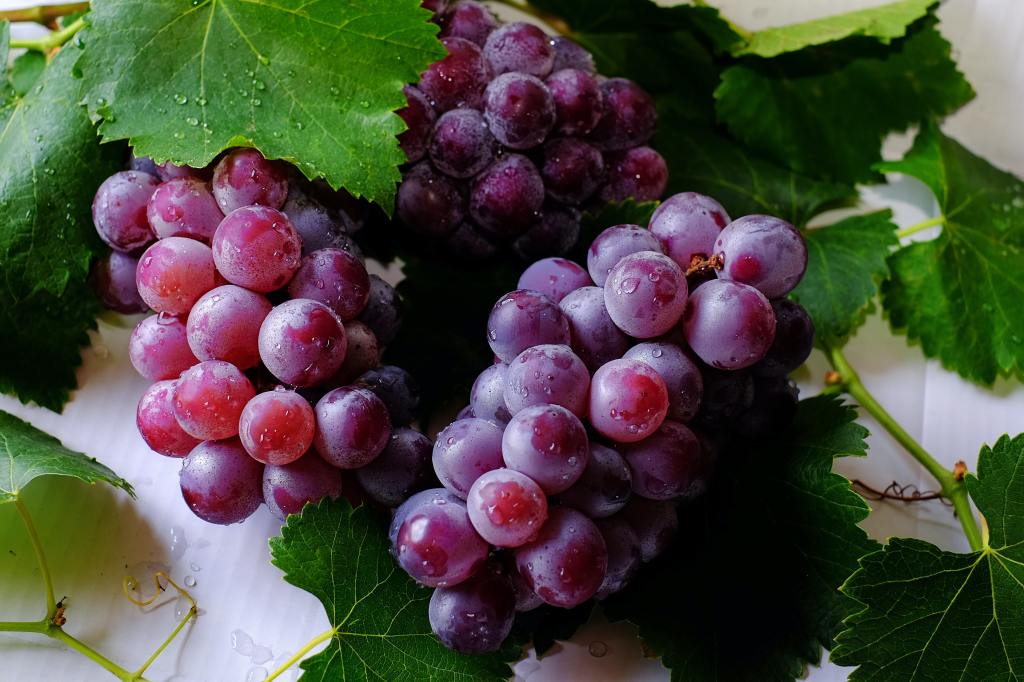
How can there be both good fruit and bad fruit?  In the parable of the Vine and the branches recorded in the 15th chapter of John’s Gospel Jesus says, “As the branch cannot bear fruit of itself, unless it abides in the vine, neither can you, unless you aide in Me.”  To me, this says there’s fruit and no fruit, not good fruit and bad fruit.  Does Jesus contradict Himself?  Can both passages be true?

I find my answer to that is yes but only when I consider the life that flows from the vine to the branch in terms of the Holy Spirit.  There is Jesus and there is Me.  We are separate in a sense (We can’t ever be truly separate as in Him all things hold together as described in Colossians 1:17.  That’s a vast subject I don’t have space to address here).  And yet, His life is my life because His Spirit lives in me.  I am only aware of His life in me because the Spirit reveals it to me.  This is true of every believer so how can a believer bear bad fruit?  When I return to Matthew 7, Jesus says “I will declare to them, ‘I never knew you’.” (Verse 23). 

Intimacy with Jesus Christ is the answer.  When I realize I abide in Him, that apart from Him I can do nothing, that I need the flow of His Spirit every moment of my life, the fruit I bear will be good fruit.  If that flow is stifled or diminished somehow, I would still bear fruit but it would be shriveled, tasteless, perhaps rotten fruit.  I wonder if this is what the Apostle Paul meant when he said “do not quench the Spirit” in 1 Thessalonians 5:19. 

In the very next verse Paul says, “Do not despise prophecies.”  Prophecies are important.  Teachers of the Word are important.  Knowing the difference between good fruit and bad fruit is important.  Galatians 5: 22-23 tells me what the fruit of the Spirit is, “love, joy, peace, longsuffering, kindness, goodness, faithfulness, gentleness, self-control.”  Here is an entire list of Spirit fruit I can taste for myself, savor, become familiar with as they become part of me.  It’s only by tasting the good fruit that comes from a life in the Spirit that I can recognize the taste of the bad fruit when it is served up to me.

  1. Vine, W.E., Vine’s Expository Dictionary of Old and New Testament Words, Thomas Nelson Inc., Nashville, Tennessee, 1997, Prophet, Page 894

Share this:

  • Print (Opens in new window) Print
  • Tweet
  • Email a link to a friend (Opens in new window) Email
  • Share on Tumblr
Like Loading...
Newer posts →

Categories

Featured Posts

Isaiah 45:7

When Tradition and I Part Ways

Keep reading
Kate's avatar by Kate November 28, 2022April 28, 2024
Gospel and Letters of John

A New Heart

Keep reading
Kate's avatar by Kate December 7, 2020March 14, 2021
Studies

The Way He Has Made

Keep reading
Kate's avatar by Kate August 7, 2023August 6, 2023

Enter your email address to subscribe to this blog and receive notifications of new posts by email.

Join 210 other subscribers
Follow Renaissance Woman on WordPress.com

Follow Me on Facebook

Follow Me on Facebook

Meta

  • Create account
  • Log in
  • Entries feed
  • Comments feed
  • WordPress.com

Blog at WordPress.com.

  • Subscribe Subscribed
    • Renaissance Woman
    • Join 169 other subscribers
    • Already have a WordPress.com account? Log in now.
    • Renaissance Woman
    • Subscribe Subscribed
    • Sign up
    • Log in
    • Report this content
    • View site in Reader
    • Manage subscriptions
    • Collapse this bar
 

Loading Comments...
 

You must be logged in to post a comment.

    %d