
• About Me
  • Study Links

Renaissance Woman

~ Test All Things; Hold Fast What is Good-1 Thessalonians 5:21

Renaissance Woman

Tag Archives: Biblical Greek

Testing the Fruit

01 Monday Mar 2021

Posted by Kate in Walking in the Way

≈ 1 Comment

Tags

Bearing Fruit, Bearing Good Fruit, Bible Instruction, Bible Living, Bible Study, Bible Truth, Biblical Greek, Christ Life, Christian Living, False Prophets, Fruit of the Spirit, Indwelling Christ, Indwelling Spirit, Koine Greek
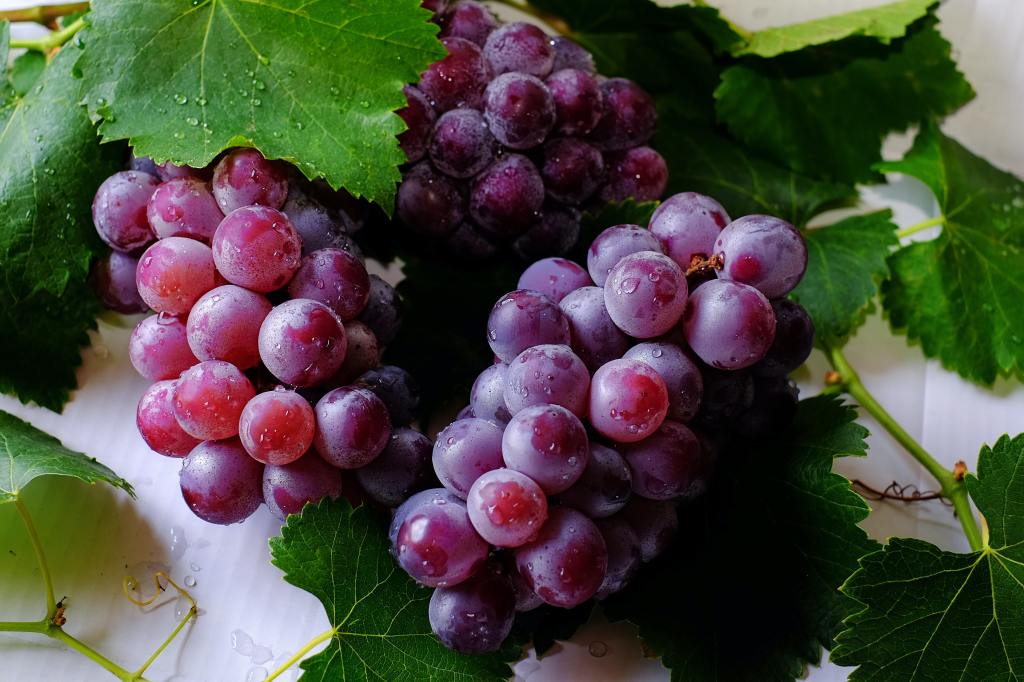
Photo by Kai-Chieh Chan from Pexels

This week, I find myself still in 1 John 4.  Specifically, his admonition in verse 1: “Beloved, do not believe every spirit, but test the spirits, whether they are of God; because many false prophets have gone out into the world.”  I have seen stories of those claiming to be prophets and/or claiming to have received prophetic messages from God.  Statements made by these prophets have since turned out to be untrue.  No doubt I need look no further to see what John meant by false prophets. 

Here is where I find study important when I am attempting to understand scripture.  I bring whatever I believe a word means to scripture when I read it and this can be dangerous when I thus interpret the meaning of a passage.  Whenever I read the word “prophet” I know that means “someone who says what God is going to do in the future”.  A modern day prophet is someone like the Old Testament prophets but better because that person is (ought to be) spirit-filled.  Or, at least I assume I know because that’s how the word has been used and is thus the definition foremost in my mind when I read scripture but; is that really what the word means?  It is important to me that I know and so I turn to my Strong’s Concordance.

The Greek word translated “false prophet” is pseudoprophetes (S5578).  What’s cool about studying Greek is the words can be broken into parts and their meanings looked at.  Pseudoprophetes can be split into pseudes which means “untrue, i.e. erroneous, deceitful, wicked–false, liar” and prophetes (S4396) which, while it does mean “a foreteller (“Prophet”)” it also means “An inspired speaker, a poet;-prophet”.  Prophetes can be split into its parts of pro (S4253) and phemi (S5346).  Pro means “fore, i.e. in front of, prior to” and phemi means “to show or make known one’s thoughts”.  My trusty Vine’s Expository Dictionary has: “PROPHETES, one who speaks forth or openly, A), a proclaimer of a divine message…one to whom and through whom God speaks.”1  With just this bit of study, I see that a prophet can be but is not necessarily someone who foretells the purposes of God in the future.  Rather, anyone who stands up and claims to be speaking on behalf of God is a prophet which would include any teacher, pastor, writer, etc. 

I see this is so when I look at Hebrews 1:1-2 and Revelation 19:10.  The Hebrews passage says, “God, who at various times and in various ways spoke in time past to the fathers by the prophets, has in these last days spoken to us by His Son, whom He has appointed heir of all things, through whom also He made the worlds” and the Revelation passage says, “…for the testimony of Jesus is the spirit of prophecy.”  It bears repeating: God speaking by His Son and the testimony of Jesus is the spirit of prophecy.  To me, these scriptures say it isn’t just a prophet’s declaration of the future I need to be testing but also I need to be testing whatever is said by anyone claiming to speak on the word of God.  I sincerely hope my words are being subjected to the same test.  What test?

 For further clarification, I turn to the words of Jesus Himself.

In Matthew 7: 15-20, Jesus warns to beware of false prophets.  He says “you will know them by their fruits” in verse 16 and says it again in verse 20: “Therefore by their fruits you will know them.”  Jesus speaks about two kinds of fruit in this small passage.  “Do men gather grapes from thorn bushes or figs from thistles?” He asks and then continues, “Even so, every good tree bears good fruit, but a bad tree bears bad fruit…every tree that does not bear good fruit is cut down and thrown into the fire” (Matthew 7:16-17, 19).

How can there be both good fruit and bad fruit?  In the parable of the Vine and the branches recorded in the 15th chapter of John’s Gospel Jesus says, “As the branch cannot bear fruit of itself, unless it abides in the vine, neither can you, unless you aide in Me.”  To me, this says there’s fruit and no fruit, not good fruit and bad fruit.  Does Jesus contradict Himself?  Can both passages be true?

I find my answer to that is yes but only when I consider the life that flows from the vine to the branch in terms of the Holy Spirit.  There is Jesus and there is Me.  We are separate in a sense (We can’t ever be truly separate as in Him all things hold together as described in Colossians 1:17.  That’s a vast subject I don’t have space to address here).  And yet, His life is my life because His Spirit lives in me.  I am only aware of His life in me because the Spirit reveals it to me.  This is true of every believer so how can a believer bear bad fruit?  When I return to Matthew 7, Jesus says “I will declare to them, ‘I never knew you’.” (Verse 23). 

Intimacy with Jesus Christ is the answer.  When I realize I abide in Him, that apart from Him I can do nothing, that I need the flow of His Spirit every moment of my life, the fruit I bear will be good fruit.  If that flow is stifled or diminished somehow, I would still bear fruit but it would be shriveled, tasteless, perhaps rotten fruit.  I wonder if this is what the Apostle Paul meant when he said “do not quench the Spirit” in 1 Thessalonians 5:19. 

In the very next verse Paul says, “Do not despise prophecies.”  Prophecies are important.  Teachers of the Word are important.  Knowing the difference between good fruit and bad fruit is important.  Galatians 5: 22-23 tells me what the fruit of the Spirit is, “love, joy, peace, longsuffering, kindness, goodness, faithfulness, gentleness, self-control.”  Here is an entire list of Spirit fruit I can taste for myself, savor, become familiar with as they become part of me.  It’s only by tasting the good fruit that comes from a life in the Spirit that I can recognize the taste of the bad fruit when it is served up to me.

  1. Vine, W.E., Vine’s Expository Dictionary of Old and New Testament Words, Thomas Nelson Inc., Nashville, Tennessee, 1997, Prophet, Page 894


Share this:

  • Print (Opens in new window) Print
  • Tweet
  • Email a link to a friend (Opens in new window) Email
  • Share on Tumblr
Like Loading...

From Whence I Came

28 Monday Dec 2020

Posted by Kate in Gospel and Letters of John, Studies

≈ 2 Comments

Tags

Baptism, Bible Instruction, Bible Living, Bible Reference, Bible Study, Bible Truth, Biblical Greek, Born of God, Born of the Word, Born of Water, Christian Life, Indwelling Spirit, Kingdom of God, Kingdom Truth, Life in Christ, Origin

I had planned for this week’s post to close out on my study of John 3:5 but I find there is an interpretation of “born of water” I would be remiss if I didn’t address.  That interpretation is the one that states being born of water is in reference to our physical birth.  I had personally discounted this interpretation because I had no found no scripture using “born of water” to mean physical birth.  I had found “born of a woman” but never “born of water”.  I had looked at various blog posts that discounted this interpretation but was looking up my scripture reference in the Mirror Study Bible and saw that John 3:5 was translated as “unless someone is born out of water (the womb) and Spirit, there would be no possible connection with the realm of God!” 1 

When I first started this series and was talking it over with my mother, she said she’d always thought being born of water meant physical birth because of the rush of water that announces an imminent birth.  She had been taught so in her church.  While I personally have never heard this interpretation, I’ve also never heard a sermon on John 3:5 so don’t have any idea how prevalent this interpretation might be.  And so, in the interests of being thorough, I am going to take a look at the possibility that being born of water is referencing the physical birth.

At first glance, this interpretation appears obvious.  Nicodemus does ask how it’s possible for a grown man to return to the womb and Jesus does reply with “that which is born of flesh is flesh” (John 3:6).  The Mirror Study Bible translates John 3:6 as, “Whatever originates out of flesh is flesh; but what is sourced in Spirit is spirit” and then has the following commentary: “The Message says, when you look at a baby, it’s just that: a body you can look at and touch.  But the person who takes shape within is formed by something you can’t see and touch—the Spirit”.

Let us continue in the Mirror Study Bible for two more verses.  John 3:7; “Don’t be so surprised when I say to you [manity – plural!] You couldn’t get here in the flesh unless you got here from above! (See John 1:10 These are the ones who discover their genesis in God beyond their natural conception!  This is not about our blood lineage or whether we were a wanted or an unwanted child – this is about our God-begotteness; we are his dream come true!  We are not the invention of our parents! [You are the greatest idea God has ever had!]) John 3:8; We can observe the effect the wind has and hear its sound whenever it touches objects – yet those objects do not define the wind; it comes and goes of its own accord – if life was not born out of the spirit in the first place, it would not be possible to detect spirit influence at all!  We are spirit-compatible by design! (Spirit is our origin!  Not our mother’s womb!…) 

This confuses me a bit.  What is Mr. du Toit saying here?  Is he saying while the Spirit is our true origin, we must be born into a physical body in order to-he says have a possible connection but other translations say see, enter-the Kingdom of God?  If so, I have a massive question I must lay before my Heavenly Father.  What about all the children who don’t make it through the birth process?

While seeking an answer in scripture to that question, I found I had to ask another: when does life begin?  I’ve heard various people say life begins at birth and others say it begins at conception.  What does the Bible say?  The Bible appears to share a truth so massive my mind can hardly fathom it.  The Writer of the Book of Hebrews, in talking about the Priesthood of Melchizedek, says it is a higher priesthood than that of Levi because “even Levi, who receives tithes, paid tithes through Abraham, so to speak, for he was still in the loins of his father when Melchizedek met him” (Hebrews 7:9-10) This scripture suggests Levi was alive in his great-grandfather decades before his physical birth.  And yet, there is a scripture that takes all of humanity’s origins back further than Abraham because “as in Adam all die” (1 Corinthians 13:22).  The first human made a choice that affected every one of his descendants.  It affected me so I had to be in Adam all those millennia before my actual birth.

The Bible does make clear the fact that God knew us before our physical birth.  God says to Jeremiah, “before I formed you in the womb I knew you: Before you were born I sanctified you” (Jeremiah 1:5).  One of my favorite Psalms contains a passage that echoes God’s words to Jeremiah: “You formed my inward parts: You covered me in my mother’s womb…my frame was not hidden from you…you saw my substance, being yet unformed.  And in your book they all were written, the days fashioned for me, when as yet there were none of them.” (Psalm 139: 13-16) The Gospel of John says “All things were made through Him and without Him nothing was made that was made.”  Consider Colossians 1:16: “For by Him all things were created that are in heaven and that are on earth, visible and invisible, whether thrones or dominions or principalities or powers.  All things were created through Him and for Him.”  Ephesians 1:4-5 says “Just as He chose us in Him before the foundation of the world, that we should be holy and without blame before Him in love, having predestined us to adoption as sons by Jesus Christ to Himself, according to the pleasure of His will”.   

When I meditate on these scriptures, especially Colossians and Ephesians, I think I have not yet begun to fathom my origin.  Regarding John 3:5, I do not agree that “born of water” means a physical birth and then being born of the Spirit is the being born again.  In fact, the Greek word that has been translated again is anothen (G509) and would have been translated more accurately as from above, or anew.  (I’ve addressed this here) I believe born of water and the spirit were meant to explain being born anew and conducting this study has convinced me that the being born from above has nothing to do with water baptism.  Do I think a human has to be born physically and live some time on this earth in order to be then born into the Kingdom of God?

I do think this human existence is of immense value.  I think every life matters to God in a way we humans don’t understand unless His Spirit opens our eyes.  I know death is an enemy but one that is defeated by Jesus Christ (see 1 Corinthians 15, Revelation 1:18) therefore I do not believe the death of this body in some way thwarts God.  I do know that “in the dispensation of the fullness of the times He might gather together in one all things in Christ, both which are in heaven and which are on earth-in Him.” The Amplified Bible puts it beautifully: “For from Him and through Him and to Him are all things. (For all things originate with Him and come from Him; all things live through Him, and all things center in and tend to consummate and to end in Him.) To Him be glory forever!  Amen (so be it). (Romans 11:36)

Amen.

To be continued…

  1. “Scripture taken from THE MIRROR. Copyright © 2012. Used by permission of The Author.”

Back to Part Six

Continue to Part Eight

Share this:

  • Print (Opens in new window) Print
  • Tweet
  • Email a link to a friend (Opens in new window) Email
  • Share on Tumblr
Like Loading...

Baptize to Repentance

14 Monday Dec 2020

Posted by Kate in Gospel and Letters of John, Studies

≈ 2 Comments

Tags

Baptism, Bible Instruction, Bible Learning, Bible Reference, Bible Study, Biblical Greek, Change of Heart, Change of Mind, Gospel of John, Nicodemus, Repent, Repentance

In this week’s post, I continue looking at John 3:5 and the question; does “born of water” refer to water baptism?  I have yet to be convinced it does because I cannot find anything that suggests water baptism being performed by John would have occurred to Nicodemus in answer to Jesus’ words.  I had hoped I would find an easy answer in the Old Testament thinking that the phrase “born of water” might have been used somewhere and so I looked through my lexicons looking for said phrase.

I couldn’t find it.  I do admit I might have missed it: to be thorough I looked up “born” and, since James 1:18 in the King James Version uses “begat” rather than “birthed” or “born”, I looked up “begat” as well.  There was a great deal of begetting in the Old Testament.  Knowing I may not have read the scripture lists with as detailed an eye as I ought, I went to Google.  The search engine was not able to return a single instance of the phrase “born of water” in the Old Testament.  Just for fun, I looked up “water” and encountered many phrases I’d like to take a look at another time (what does it mean to drink the water of iniquity?) but found nothing that suggested someone intimate with the Old Testament scriptures like Nicodemus would associate the water baptism of John with being born anew/born of water and spirit. 

What was the baptism of John?  Mark 1:4 tells me it was a baptism to the repentance of sins.  I want to take a look at the word repentance because it doesn’t mean in this passage what general usage says it means.  My New World Dictionary defines repentance as “a repenting or being penitent; feeling of sorrow, etc., esp. for wrongdoing; compunction; contrition, remorse.”  Repent is further defined as “to feel sorry or self-reproachful for what one has done or failed to do, be conscious-stricken or contrite, to feel such regret…as to change one’s mind about…”  Repentance is made up of the Latin “re-again” and “poenitere-penitent.”1

There is a word for this in the New Testament: metamellomai (G3338).  It is the word used in Matthew 27:3 where Judas “repented” and brought back the thirty pieces of silver to the chief priests and elders.  It is a word that expresses “a desire that an action might be undone, express regrets, or even remorse, but does not imply an effective change of heart”2.

I am careful whenever I find someone using the word repentance.  It’s critical to understand what is being said.  Is repentance being used to mean “to be afflicted in mind”, “to be troubled for our former folly”…”a being displeased for what we have done”?3  Is repentance being used to mean performing penance over and over again?  If so, then it is not the same repentance used in accordance with the baptism of John.  The Greek word used there is metanoia (G3341) and “where there was a difference made (in meaning), metanoia was the better word, which does not properly signify the sorrow for having done amiss, but something that is nobler than it…metanoia and its verb refer to a true change of heart toward god.”4

I found an article online that said that baptism was used for ritual cleansing of Gentile proselytes and that John applied it to the Jews themselves: all needed to have a true heart change toward God.  No wonder that the Pharisees refused to step into the water! (See Mathew 3:5-9).  And, this is why I am convinced that Jesus never meant baptism when he spoke to Nicodemus about being born of water and spirit.  I doubt that it ever would have occurred to Nicodemus-religious leader and teacher of Israel-that he needed to have a change of heart toward God.  

I must also take into consideration the fact that Jesus could not have meant water baptism because John’s baptism was a forerunner to what did not yet exist.  Christian baptism is the physical demonstration of the identification with the death, burial, and resurrection of Christ and has a much deeper significance than the baptism of John (See Acts 18:24-26, 19:1-5).  I cannot agree with Dr. Vincent when he says “Jesus’ words included a prophetic reference to the complete ideal of Christian baptism”5.

Yet I do agree Jesus clearly expected Nicodemus to know what He meant.  Nicodemus’ place among the upper echelons of the Pharisees meant he could not be in ignorance of all that had happened in recent years.  Consider first the coming of the wise men as related in Chapter 2 of Matthew’s gospel.  Their appearance troubled Herod the king and all Jerusalem (verse 3) and Herod had to call the chief priests and scribes to him to inquire where the Christ was to be born (verse 4).  Here’s a thing that blows my mind: the priests and scribes are called into the presence of the king to answer the wise men, they quote the prophet Micah, and then what…go their way?  No one seemed the least bit curious.  Selah!  (pause, and calmly think of that!)  Then comes the devastating slaughter of the children in Bethlehem (Matthew 2:16-18, Jeremiah 31: 15).  Then there is John the baptizer.  He quotes Isaiah and declares he is “the voice of one crying in the wilderness: ‘make straight the way of the Lord’” (John 1:23, Isaiah 40:3). 

I wonder if Jesus expected one so familiar with the prophets and not ignorant of what had been happening in the region, to recognize who he was meeting at night.  I wonder if that is what Jesus meant when he asked, “are you the teacher of Israel and do not know these things?”  I wonder if when Jesus said “you must be born of water” he wasn’t thinking of His own words to Jeremiah when He called Himself the “fountain of living waters (Jeremiah 2:13, 17: 13) and of his words to Ezekiel when He promised a new heart and His own Spirit. 

“But as many as received Him, to them He gave the right to become children of God, to those who believe in His name: who were born, not of blood, nor of the will of the flesh, nor of the will of man, but of God” (John 1:12-13)

To be continued…

1.  Guralnik, David B. Editor in Chief, Webster’s New World Dictionary of the American Language, Cleveland * New York, William Collins + World Publishing Co., Inc., 1976

2. New Koine Greek Textbook Series Supplements, 2nd Edition, Richard Chenevix Trench’s Synonyms, Repent, 2018, 145-146

3. New Koine Greek Textbook Series Supplements, 2nd Edition, Richard Chenevix Trench’s Synonyms, Repent, 2018, 145-146

4. New Koine Greek Textbook Series Supplements, 2nd Edition, Richard Chenevix Trench’s Synonyms, Repent, 2018, 145-146

5.  Vincent, Marvin R., D.D., Vincent’s Word Studies in the New Testament Volume II, Peabody, Massachusetts, Hendrickson Publishers, Gospel of John Chapter 3:5. Born of Water and the Spirit, Page 92

Back to Part Four

Continue to Part Six

Share this:

  • Print (Opens in new window) Print
  • Tweet
  • Email a link to a friend (Opens in new window) Email
  • Share on Tumblr
Like Loading...

A New Heart

07 Monday Dec 2020

Posted by Kate in Gospel and Letters of John, Studies

≈ 2 Comments

Tags

A New Heart, A New Spirit, Baptism, Bible Instruction, Bible Living, Bible Reference, Bible Study, Bible Truth, Biblical Greek, Biblical Hebrew, Ezekiel, Gospel of John, Holy Spirit, Psalms, Studying the Word, Word of God, Word Study

Conducting a word study on a passage is an undertaking most fascinating.  Sometimes, as I trace the words to their roots in the original language, a picture forms that makes the scripture leap off the page.  Other times, while the original meaning doesn’t reveal anything surprising, the words usage-or lack thereof-in other scriptures proves to be fascinating.  Such proved to be the case with my word study on Ezekiel 36: 25-27.

A quick recap: I decided on the word study when I was referred back to this passage by several different sources I used in my study of John chapter 3.  I found it fascinating that both the sources that assured me that the “born of water” in John 3:5 did mean water baptism as well as those that assured me it did not referenced me back to Ezekiel 36.  I decided to see for myself.

I do try not to undertake any study with preconceived ideas as to the meaning of scripture.  This is not easy as I have been a Christian all of my life and still find I carry ideas picked up from my church going days that are based on a doctrinal tradition rather than scripture.  The Holy Spirit is steadily rooting those out but, during this study, I caught myself mentally linking scriptures together that do not necessarily mean what I think they mean.

What do I mean?

It’s probably obvious by now that I do lean towards the interpretation that “born of water” does not mean water baptism but does, rather, mean an inward working of Jesus through the Holy Spirit.  (See last week’s post)  My study of Ezekiel 36: 25-27 seemed to bear this out.  God does say He “will sprinkle clean water” and “will cleanse you from all your filthiness and from all your idols.”  Despite this, I do think it’s a stretch to infer water baptism from this passage and even more of a stretch to think Jesus would have expected Nicodemus to make the association.  There is no mention of the ritual cleansing established in the law in all of chapter 36. The cleansing mentioned in my study scriptures is an intention of God and comes from the hand of God.  Verse 22 states “I do not do this for your sake, O house of Israel, but for My holy name’s sake…” John’s baptism was to the repentance of sins and I intend to go into this in more depth next week.  Suffice for this post, the Greek word translated repentance is metanoia (G3341) and means a change of mind1.  Important, necessary, but I do not see how such a baptism is synonymous with Jesus’s expounding on what it means to be born anew in John 3:5.  I am becoming convinced such a thing is a work of God inside of us rather than an outward immersion in water and these verses in Ezekiel seem to make this clear. However, I am not interested in bending scripture to support my own conviction:  I want to know the truth and am open to my word study showing me otherwise.

It didn’t do so. Verse 26 states “I will give you a new heart and put a new spirit within you.”  Here I find that same dual action of God described in John 3:5.  I was so excited!  “I get it!” I exclaimed to myself and my mind was flooded with other scriptures.  This is what metanoia must look like because Proverbs 23:7 says “as he thinks in his heart so is he” so this change in heart would of course result in a change of mind.  And then, thought I, Matthew 5:1 says “blessed are the pure in heart for they shall see God” and I just bet that “See God” in this passage is the same as “See the Kingdom of God” in John 3:5. 

I do not wish to get into an argument over translations of the Bible, i.e. which is better/more accurate/most useful.  What I do wish to say here is that, just because a translator used the same English words in different passages, does not mean they are the same words in the original languages.  The words translated “see” in these two passages in the King James Version are not the same in the Greek.  The Hebrew word translated “heart” in my study scriptures is not the same as the Hebrew word translated “heart” in Proverbs 23:7.  Does this mean I am wrong in my assumptions?  Not necessarily.  What it does mean is that there are layers of meanings in these scriptures not immediately evident when I read them in English and are thus worthy of more study.  It also shows me how important it is to lay aside all my preconceived notions and focus only on what’s in the text.  It is supremely exciting to see that there is something new to discover.  Word studies do feel a bit like unearthing buried treasure.

And so, what treasures did I find in Ezekiel 36: 25-27?  As I conducted my study, I couldn’t help verses from Psalm 51 from coming to mind.  On a whim, I took a look at the words for “clean”, “heart”, and “spirit” in Psalm 51:10 and compared them to the same words in Ezekiel.  They were, each one, the same Hebrew.  Perhaps such a thing ought to be obvious but, since I found other Hebrew words translated “clean”, “heart”, and even “spirit” in other passages, I thought it best to verify. 

Do you know Psalm 51:10?  “Create in me a clean heart, O God, and renew a right spirit within me.”  This is a cry of David’s heart after the fiasco with Bathsheba.  It has been the cry of my heart many times.  As my study unfolded, it seemed to me that the promise of God in Ezekiel 36 was in answer to David’s plea in Psalm 51.  David cries out for a clean heart and right spirit and God promises a new heart and spirit.  Indeed, He promises His spirit (verse 27).

That’s all well and good, I imagine some of you saying, but what does that have to do with the material point?  Not a thing.  Nothing in this study led me to the conviction that these verses in Ezekiel ought to have suggested the water baptism being performed by John to the mind of Nicodemus. Still, I find I cannot unequivocally say that “born of water” in John 3:5 does not mean baptism.  There is still study I need to perform.

To be continued…

  1. Vine, W.E., Vine’s Expository Dictionary of Old & New Testament Words, 1997, Nashville, Tennessee, Thomas Nelson, Inc., 952.  

Back to Part Three

Continue to Part Five

Share this:

  • Print (Opens in new window) Print
  • Tweet
  • Email a link to a friend (Opens in new window) Email
  • Share on Tumblr
Like Loading...

The Mind of a Man

23 Monday Nov 2020

Posted by Kate in Gospel and Letters of John, Studies

≈ 3 Comments

Tags

Baptism, Bible Instruction, Bible Reference, Bible Study, Biblical Greek, Biblical Hebrew, Christian Life, Gospel of John, Meeting at Night, Nicodemus, Studying the Word, Word Study

A fun photo I thought reminiscent of meeting at night

This week’s post continues my looking at John 3:5.  I have asked myself if “born of water” in this verse really does mean water baptism.  I spent some time on the internet since last week’s post and have seen the same number of blog posts insisting it does mean water baptism as there are posts that insist it does not.  This week, I return to the reference materials I have at hand in attempts to answer the question to my own satisfaction.  As always, I thank the Holy Spirit for being my guide and teacher and opening my eyes to what He would have me see.  Then, I open Vincent’s Word Studies in the New Testament and begin to read.

I must begin by saying the commentary for Born of Water and the Spirit is beautiful.  Dr. Vincent says wonderful things about baptism which I may end up sharing in future posts.  I must also say that I don’t disagree with anything he says about baptism, especially; “baptism considered merely as a rite, and apart from the operation of the Spirit does not and cannot impart new life.1”  Despite this, I still have a quibble with the assumption that water baptism is what Nicodemus should have realized. 

In order to look at John 3:5, I have to back up to John 3:3 where Jesus says “…unless a person is born again…”  Dr. Vincent expounds on the meaning of the word “again” listing its usages and translations in the New Testament.  Again is translated “From the Top” (Matthew 27:51, Mark 15:38, John 19:23), “From above” (John 3:31 & 19:11, James 1:17 & 3:15, 17) “From the Beginning” (Luke 1:3, Acts 26:5), and “again” (Galatians 4:9)2.  Dr. Vincent concludes his exposition of this verse by stating the closest rendering of this phrase is “except a man be born anew”; a rendering which would explain Nicodemus’ confusion. 

I do find there is agreement on one thing: that Jesus’ words in verse 5 are His explaining what He meant in verse 3.  Being “born of water and the spirit” is synonymous with being “born again or anew.”  Dr. Vincent says, “Thus Jesus’ words included a prophetic reference to the complete ideal of Christian baptism–‘the washing of regeneration and the renewing of the Holy Ghost’ (Titus 3: 5; Ephesians 5:26)3. 

Before I go any further, I must ask consider Nicodemus himself.  Was he someone genuinely seeking answers from Jesus-the “anxious inquirer”-or did he come to Jesus as a member of the Pharisees as a class who, anxious to keep their leadership in religion, desired to discover whether they could come to an understanding with this new teacher?4  I am not ready to declare myself certain one way or another.  What I do say with certainty is Jesus expected Nicodemus to understand what he was saying and I find these arguments for water baptism rely heavily on the New Testament.  It may be too easy for us, partakers of the New Covenant, looking at scripture from the finished work of Christ, to infer meanings that simply would not have been in the mind of a 1st century Pharisee.  To suggest that Jesus was speaking prophetically of the ideal of Christian baptism and then to chastise Nicodemus for not understanding when Jesus was not only at the beginning of His ministry but no one knew for certain what was happening; does make Jesus appear a bit unreasonable.  Even writing that last sentence I know I too am referencing the New Testament-2 Corinthians 2:8 in fact-and so I resolve to forget the New Testament for a moment.

Nicodemus would have had the scriptures called the Old Testament in my bibles.  As a teacher of Israel (John 3:10), Nicodemus would have been familiar with them in a way I can only imagine.  Is it possible, then, for me to get inside the mind of this man?  Not without help certainly and, for that, I turn to The Complete Jewish Study Bible.

When I look up my study text, I find an article entitled ‘“Born Again” John 3:3’.  This article tells me what the concept of being born again might have meant to Nicodemus.  The article states Nicodemus had reached the age of a senior citizen and had already met the Pharisee requirements of being “born again”, that there were six ways of being “born again” in Pharisaic Judaism, that Nicodemus was already qualified in four of those ways, and that the other two would have been impossible for him.  The two this article says were impossible for him were 1, a Gentile was said to be “born again” if he converted to Judaism and 2, Nicodemus would have to have been crowned as king. 

The four requirements Nicodemus already fulfilled were:

  1. When a Jewish boy becomes bar mitzvah at thirteen, he is said to be “born again”.  Nicodemus was well beyond the age of thirteen, had already experienced his bar mitzvah and was thus already “born again”. 
  2. Marriage.  When a Jewish man married he was said to be “born again.”  A member of the Sanhedrin must be married so Nicodemus already fulfilled this requirement since he was already a member of the Sanhedrin. 
  3. A Jew could be “born again” when ordained as a rabbi.  Jesus calls Nicodemus rabbi/teacher (verse 10). 
  4. The head of a rabbinical school was said to be “born again”.  Jesus said Nicodemus “held the office of teacher in Israel” (verse 10) which meant he was already head of a school.5

I found this article fascinating but perhaps it doesn’t really move me toward answering my material question of equating water baptism with being born of water.  The Complete Jewish Study Bible has some commentary on verse 5: “Born from water and the Spirit”.  In Judaism, immersion in water is directly linked to ritual cleansing of the body, while the Spirit enables people to turn from sin and live a holy life.  “Born from water” in its grammatical construction refers to the Holy Spirit (Ezekial 36:25-27; John 7:38-39).  There is no necessary reference to the mikveh (ritual cleansing bath) here.  Rather, the grammatical construction (hendiadys) indicates that “water” is a descriptor of the Spirit, as in Ezekiel 36:25-27.6

This is not the first time I’ve been pointed to Ezekiel 36:25-27 from both sides of the argument.  I have learned to pay attention when the same verse or concept keeps popping up and, thus, I will continue this study next week.

  1.  Vincent, Marvin R., D.D., Vincent’s Word Studies in the New Testament Volume II, Peabody, Massachusetts, Hendrickson Publishers, Gospel of John, 5. Born of Water and the Spirit, Page 92.
  2. Vincent, Marvin R., D.D., Vincent’s Word Studies in the New Testament Volume II, Peabody, Massachusetts, Hendrickson Publishers, Gospel of John, 3. Be born again, Page 90.
  3. Vincent, Marvin R., D.D., Vincent’s Word Studies in the New Testament Volume II, Peabody, Massachusetts, Hendrickson Publishers, Gospel of John, 5. Born of Water and the Spirit, Page 92.
  4. Eiselen, Lewis, Downey, The Abingdon Bible Commentary, 1929, The Abingdon Press, Inc., John Chapter II, the Interview with Nicodemus, Page 1069.
  5. The Complete Jewish Study Bible, 2016, Peabody, Massachusetts, Hendrickson Publishers Marketing, LLC, Gospel of John, Supplementary Article “Born Again” John 3:3, Page 1525.
  6. The Complete Jewish Study Bible, 2016, Peabody, Massachusetts, Hendrickson Publishers Marketing, LLC, Gospel of John, Commentary, 3:5, Page 1524

Back to Part One

Continue to Part Three

Share this:

  • Print (Opens in new window) Print
  • Tweet
  • Email a link to a friend (Opens in new window) Email
  • Share on Tumblr
Like Loading...
Newer posts →

Categories

Featured Posts

Isaiah 45:7

When Tradition and I Part Ways

Keep reading
Kate's avatar by Kate November 28, 2022April 28, 2024
Gospel and Letters of John

A New Heart

Keep reading
Kate's avatar by Kate December 7, 2020March 14, 2021
Studies

The Way He Has Made

Keep reading
Kate's avatar by Kate August 7, 2023August 6, 2023

Enter your email address to subscribe to this blog and receive notifications of new posts by email.

Join 210 other subscribers
Follow Renaissance Woman on WordPress.com

Follow Me on Facebook

Follow Me on Facebook

Meta

  • Create account
  • Log in
  • Entries feed
  • Comments feed
  • WordPress.com

Blog at WordPress.com.

  • Subscribe Subscribed
    • Renaissance Woman
    • Join 169 other subscribers
    • Already have a WordPress.com account? Log in now.
    • Renaissance Woman
    • Subscribe Subscribed
    • Sign up
    • Log in
    • Report this content
    • View site in Reader
    • Manage subscriptions
    • Collapse this bar
 

Loading Comments...
 

You must be logged in to post a comment.

    %d