
• About Me
  • Study Links

Renaissance Woman

~ Test All Things; Hold Fast What is Good-1 Thessalonians 5:21

Renaissance Woman

Tag Archives: Book of Isaiah

His Attributes Are Clearly Seen

10 Monday Oct 2022

Posted by Kate in Isaiah 45:7, Studies

≈ Leave a comment

Tags

Aleph, Bet, Bible Study, Biblical Languages, Book of Isaiah, Heart of God, Holy Spirit, Indwelling Spirit, Isaiah 45:7, Life in Christ, Life in the Spirit, Personal God
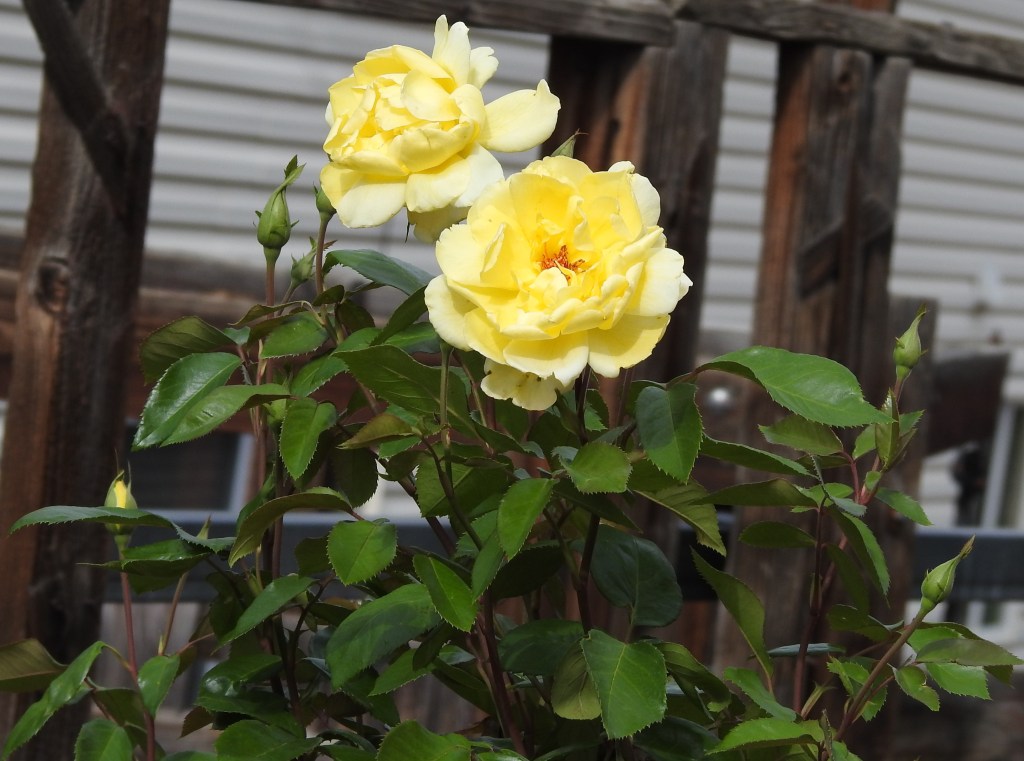
Photo by Walter Strong

Hello and welcome to another post on Renaissance Woman where, this week, I continue to look at the Hebrew letters comprising the word bara which is most often translated “create” in the Old Testament.

I admit I didn’t get far in the study process.  As Aleph is the first Hebrew letter and Bet is the second, it was easier to turn the pages of Mr. Haralick’s back and look at Aleph then to flip through to Resh which is the twentieth letter.  Thus I am not looking at the letters of bara in the order in which they appear.  As I was reading through Mr. Haralick’s entry on Aleph, I was struck by something he said regarding Elohim, the first name of God revealed in scripture.  Elohim is spelled Aleph Lamed Hey Yod Mem אלהים and, looking at the letters in reverse order gives us another name of God Yah יה and the root word male מלא (pronounced mall-ay) which means “to fill” or “to be full.  Male also means multitude, fullness or filling matter so Elohim can be understood as that aspect of Yah, God, that fills matter. (Haralick, 23)

I have already shared how energy fascinates me and I follow the studies on energy being conducted in Physics and Quantum Physics.  Studies are showing that it is energy that was converted to the smallest particles which are the building blocks of atoms and thus of all that exists.  I found this quote in Mr. Haralick’s introduction: “…’In the beginning, God created heaven and earth,’ should be rendered; ‘When God began to create heaven and earth’.  For the world is continually being created-every day, every hour, even this very instant the world is being sustained by the same primordial creative force with which it came into existence, the force of berishit (בְּרֵאשִׁית), ‘In the beginning.’  If this creative force would depart for even a split second, the world would return to nothingness.” (Haralick, xiii)  This quote made me think of Hebrews 1:3 which states Jesus Christ “upholds all things by the word of His power”. 

During this study of bara, I have been meditating not only on the Word creating in Genesis 1 but how that Word was energized by the Holy Spirit to bring into being all that exists.  I was curious how energy was associated with the Holy Spirit in scripture and so looked it up in my Strong’s Concordance. I didn’t find it.  I was so flabbergasted I thought for a moment I’d forgotten how to spell energy and was looking in the wrong place.  I had not and was not and had to accept neither Greek nor Hebrew had been translated as “energy”.  This both did and did not make sense.  I’m sure that energy wasn’t a widely studied concept in 1611 (Publication of the King James Bible) and yet I am surprised more modern translations haven’t used the word energy as it’s there in the Greek.

The Greek word is energia (G1753) and means “energy”.  Consider Ephesians 1:19: “and what is the exceeding greatness of His power toward us who believe, according to the working (energia) of His mighty power” or Ephesians 3:7 “of which I became a minister according to the gift of the grace of God given to me by the effective working (energia) of His power”.  Energia also appears in Ephesians 4:16, Philippians 3:21, Colossians 1:29, Colossians 2:12, 2 Thessalonians 2:9, 2 Thessalonians 2:11. 

Why not translate energia by the closest related English word, energy?  It might be because energy is a touchy subject among Christians.  I conducted an internet search and found articles addressing whether or not God is energy.  The consensus among the ones I looked at was a resounding “no!” and I wholeheartedly agree but that doesn’t mean we can’t understand something of how God works by exploring how scripture speaks of energy.  However, I see a de-personalization of God going on to the point where He is spoken of as a “presence” or “energy” or, the one that really makes me cringe: “the universe”.  I can see why the word “energy” would be avoided as this de-personalization becomes more widespread.  I picked up a book called Coffee Shop Conversations by Dale and Jonalyn Fincher and was astonished when Jonalyn shared she’d overhead another woman express her astonishment than anyone still believed in a personal God. It is a tragedy that God is rendered to a mere force or worse yet an aspect of His creation.

I find a similar tragedy in the consideration of creation.  I consider scriptures like Hebrews 1:19 and Colossians 1:17 and am not surprised that science is saying it is energy that is converted to matter.  It’s a strange thing:  I don’t disagree with anyone who says God called all that exists out of nothing because He is before all things.  Neither do I quibble with those who say God created all things out of Himself because of the manner in which I create.  When I write a poem I first have the thought to do so.  I decide on what form I want to use then choose rhyme and meter.  Then I sit down and write it and a new thing is brought into the world.  This analogy does break down of course because I create out of forms and words that already exist.  I am not the source of all poetry whereas God Himself is before all things and is the source of all things.  I create a poem because God Himself is a poet and I am made in His image.

I do quibble with those who say the creation is God.  He certainly thought it, called it into being, and upholds it by the dunamis of His word but He is no more His creation than I am a poem I write.  I am certainly connected to a poem I write and anyone who reads a poem can certainly learn something about me but reading one of my poems doesn’t mean the reader knows me.  It’s the same with God.  Romans 1:20 says it perfectly: “For since the creation of the world His invisible attributes are clearly seen, being understood by the things that are made, even His eternal power and Godhead, so that they are without excuse.”  God is certainly connected to His creation because it’s His.  Creation can show us what He is like but we cannot know Him via creation.

Arthur Conan Doyle wrote something I think pertains to what I am attempting to say.  It comes from his story “The Adventure of the Naval Treaty” and is spoken by Sherlock Holmes: “There is nothing in which deduction is so necessary as in religion,” said he, leaning with his back against the shutters.  “It can be built up as an exact science by the reasoner.  Our highest assurance of the goodness of Providence seems to me to rest in the flowers.  All other things, our powers, our desires, our food, are really necessary for our existence in the first instance.  But this rose is an extra.  Its smell and its colour are an embellishment of life, not a condition of it.  It is only goodness which gives extras, and so I say again that we have much to hope from the flowers.” (Doyle, 300)

I agree with Sir Conan Doyle that the goodness of God can be seen in His creation.  However, as Andrew Murray says; “Nature speaks of God and His work; but of Himself, His heart, and His thoughts of love toward us as sinners, nature cannot tell.  In his deepest misery, man seeks for God-but how often, to all appearance, in vain.  But, God be praised, this seeking in vain is not for always.  The silence has been broken.  God calls man back to fellowship with Himself.  God has spoken!” (Murray, 42)

We are not left in ignorance as to how God has spoken.  He has spoken to us in His Son (Hebrews 1:1).  He has spoken to us in a person and, since seeing Jesus means we have seen the Father (John 14:9) we know that God is Person.  We can know Him.  We can fellowship with Him.  We can have relationship with Him.  We can look at what He has made and even attempt to understand how He has made it but all of this is useless unless we look beyond created things and energy and power to the One before it all.  That One is love.  He loves us so much He gave us this beautiful world to live in and take care of.  In the midst of our failure and darkness, He sent His son Jesus Christ to rescue and restore us.  Now, He freely pours His Spirit onto and in us so that we live in union with Him. 

The Holy Spirit is difficult to understand.  Whenever I see Him in scripture He is moving, hovering, vibrating, covering, energizing, and so many other action verbs.  He is difficult to describe without using words like “energy” or “power” and, as He is the reticent Person of the Godhead, it can be easy to think of Him in impersonal terms.  And yet, in John’s gospel, the Holy Spirit is described in the most personal of terms.  He is Helper, Comforter, Teacher, and Guide.  Only a Person can be these things. 

I believe in a Personal God.  I can call Him by name: Jesus.  I can know Him as my Father.  His Spirit living in me is my very best friend.  I live in Union, Fellowship, and Relationship with Him and this is only possible because He is Infinite Person.  What He is to me, He is to everyone else.  Do not allow this precious life that is yours in Christ Jesus be stolen from you by one who has not seen.  This life is the free gift of God.  It is difficult to believe that we don’t have to earn it or clean ourselves up first so we are acceptable.  The Holy Spirit opens our eyes to this truth, strengthens us, and energizes us so we can receive it. 

Who is like our God?  Who gives gifts like our God?  Our God is an awesome God!

Hallelujah!

Unless noted otherwise, all Scriptures are quoted from The Holy Bible, New King James Version, Thomas Nelson Publishers, Nashville, Tennessee, 1982

References

Doyle, Arthur Conan, The Illustrated Sherlock Holmes Treasury, Crown Publishers Inc., 1976

Fincher, Dale & Jonalyn, Coffee Shop Conversations: Making the Most of Spiritual Small Talk, Zondervan, Grand Rapids, Michigan, 2010

Haralick, Robert M., The Inner Meaning of Hebrew Letters, Jason Aronson Inc., Northvale, New Jersey, 1995

Murray, Andrew, Holiest of All: A Commentary on the Book of Hebrews, Whitaker House, New Kensington, Pennsylvania, 1996, 2004

Strong, James, LL.D., S.T.D., The New Strong’s Exhaustive Concordance of the Bible, Thomas Nelson Publishers, Nashville, Tennessee, 1990

Walker, Allen G. The New Koine Greek Textbook, Volumes 1-4, 2014-2017

Share this:

  • Print (Opens in new window) Print
  • Tweet
  • Email a link to a friend (Opens in new window) Email
  • Share on Tumblr
Like Loading...

House of the Lord

03 Monday Oct 2022

Posted by Kate in Isaiah 45:7, Studies

≈ 1 Comment

Tags

Bet, Bible Study, Biblical Hebrew, Biblical Languages, Book of Isaiah, Create, Creation, Hebrew Letters, Holy Spirit, Indwelling Spirit, Isaiah 45:7, Kingdom Life

Image by Joseph Redfield Nino from Pixabay

Enough with the Latin!

Hello and welcome-or welcome back-to Renaissance Woman where, this week, I continue my study of the Hebrew word bara which is most often translated “create” in the Old Testament.  The root bara is spelled Bet (ב) Resh (ר) Aleph (א).  I have briefly examined Resh earlier in my study of Isaiah 45:7 but did find it interesting that, according to Mr. Haralick’s book, Bet means “container”, Resh means “cosmic container”, and Aleph means “the pulsating unbridled force.”  Container and Cosmic Container seem a bit redundant and I was curious what I might learn as I studied each letter.  I began with Bet.

Bet is the second letter of the Hebrew alphabet and the word itself-spelled Bet Yod Tav (בית )-means “house, dwelling place, or home.”  In his entry for Bet, Mr. Haralick quotes Exodus 25:8: “And let them make a sanctuary that I may dwell within them.”  I looked up this verse in the New King James version and found the word used is among rather than within.  I checked the scripture in the Comparative Study Bible and each of the four translations contained therein also have the word among.  I looked up among in the Strong’s concordance and found referenced the root tavek (H8432) which means, “to sever, a bisection, in the center, among, between, in the middle, midst.”

I must take a moment and urge anyone who wishes to go deeper into Bible Study to get an Interlinear Bible.  The Strong’s is an invaluable reference but it doesn’t give prefixes or suffixes or, in some cases, tell you which word is used in the scripture.  Case in point: John 1:1 says “In the Beginning was the word…and the word was WITH God.”  If you were to look up “with” in the Strong’s you’d have to go to the Appendix where you will find listed all the words used so frequently they’d make the concordance very unwieldly if every occurrence was included: words like A, He, Her, They, and With.  The Appendix would tell you that “with” in the Greek is sun and there’s actually an interesting lesson to learn by considering the meaning of sun in the first verse of John’s gospel.  However, an Interlinear Bible would show you the word translated “with” in John 1:1 is not sun at all but pros.  There is a different mind picture painted when the meaning of pros is meditated on in the passage. 

It’s the same looking up the Hebrew letters.  When I look up “among”, the Strong’s gives me the root tavek spelled Tav Vav Caph but my Interlinear Bible shows me the root appears with Mem as a suffix and Bet as a prefix.  The addition of the prefix and suffix make the root third person masculine plural and it would be pronounced be-tow-kum.  The Bet as a prefix means ”in, at, by, among, with, by means of, through”.  Among is a perfectly fine translation but so is within or in or in the midst.  All of this is fascinating but the word Bet means house and I have the promises of Jeremiah 31:33 and Ezekiel 36:27 ringing in my ears and so I return to my study.

2 Corinthians 6:16 says, “What agreement has the temple of God with idols?  For we are the temple of the living God; as God said, ‘I will make my dwelling among them and walk among them, and I will be their God, and they shall be my people’.”  The words the Apostle Paul quotes are found in Leviticus 26:12, Jeremiah 32:38, and Ezekiel 37:27.  First there was the Tabernacle and then the Temple which served as Houses of the Lord but there were also these promises from God that the day would come when there would be no external Tabernacle or Temple but God Himself would live within us. 

Then comes the Incarnation where “The Word became flesh and dwelt among us” (John 1:14).  The Amplified uses the word “tabernacled” instead of dwelt which I like.  The Old Testament promises are beginning to be fulfilled but are not yet.  Jesus gives wonderful promises in the upper room of the One He would send: the Comforter, the Teacher, the Spirit of Truth who would guide us into all truth.  He would speak not on His own authority but will take everything that is of Jesus and declare it to us. (See John Chapters 13-17).  The same night He gives these promises, Jesus is arrested, tried, and crucified.  He dies but before dying declares “It is finished!”  What is finished?  There is far more to be said about what was happening on the Cross than I have room for here.  I think the Book of Hebrews has the best explanation for what is referred to as the “finished work of the cross”: 

Hebrews 7:26-27: “For such a High Priest was fitting for us, who is Holy, harmless, undefiled, separate from sinners, and has become higher than the heavens; who does not need daily, as those high priests, to offer up sacrifices, first for His own sins and then for all the people’s, for this He did once for all when He offered up Himself.” 

Hebrews 9: 24-27: “For Christ has not entered the holy places made with hands, which are copies of the true, but into heaven itself, now to appear in the presence of God for us; not that He should offer Himself often, as the high priest enters the Most Holy Place every year with blood of another-He then would have had to suffer often since the foundation of the world; but now, once at the end of the ages, He has appeared to put away sin by the sacrifice of Himself.”

Hebrews 10:12: “But this man, after He had offered one sacrifice for sins forever, sat down at the right hand of God.”

I used the term “the finished word of the cross” because I’ve heard it said so often but if we stop there, there are still some of God’s promises not yet fulfilled. The Old Testament promises of God putting His Spirit within us, giving us new hearts, writing His law on those hearts, and enabling us to walk in His statutes are not fulfilled in the death of Jesus.  As the Apostle Paul writes, “If Christ is not risen, then your faith is futile; you are still in your sins!” (1 Corinthians 15:17) Our faith is NOT futile and we are NOT still in our sins because Jesus is risen from the dead!  He is not only risen but ascended to the right hand of the Father.  After His ascension came Pentecost where the Holy Spirit rushed upon those gathered together.  At last, with the lavish shedding abroad of the Spirit, the promises of God were fulfilled.

“For all the promises of God in Him are Yes, and in Amen, to the glory of God through us” (1 Corinthians 1:20).  “Therefore, if anyone is in Christ, he is a new creation…” (2 Corinthians 5:17).  Jesus Christ is the fulfillment of every promise of God which means that now, today, His Spirit is within me.  He has given me a new heart, He has written His law on it, and He is causing me to walk in His statutes.  I am in Him and thus am a new creation.  How is this possible?  Because Jesus Christ has risen from the dead, ascended to the right hand of the Father, and poured His Spirit into me.  The same Spirit that is there in Genesis 1:1 is within me.  He sends forth His Spirit and I am not only created but re-created and renewed (See Psalm 104:30). 

After his experience with the Centurion Cornelius, Peter says, “In truth I perceive that God shows no partiality” (Acts 10:34).  What is true for me is true for every other believer.  The Spirit of the Living God lives within each and every one of us.  Without Him, the Christian life is impossible.  There is no ability to love anyone, especially our enemies.  There are no streams of living water flowing out of us and into the world around us.  Without Him we do not know we are in Christ and Christ is in us and thus we have no hope of glory.  We can look at scripture and do our best to keep the rules so hopefully we get to go to heaven when we die but there is no LIFE.  We can read and memorize and know about Jesus, we can even try our hardest to be like Him but, without the Spirit of truth and wisdom and revelation; we won’t ever intimately KNOW HIM because the things of God are spiritually discerned (1 Corinthians 2:14).

“Do you not know that you are the temple of God and that the Spirit of God dwells in you?”  That is 1 Corinthians 3:16 and the question is asked again later on in Paul’s letter: “Or do you not know that your body is the temple of the Holy Spirit who is in you, whom you have from God, and you are not your own?” (1 Corinthians 6:19).  If the books written by Christian authors I’ve recently read are any indication, believers do not know the Holy Spirit lives within them.  May He open all of our eyes to see what is the hope of our calling.    

Bereshit bara Elohim…In the beginning, created God the heavens and the earth.  But these were not His house. “This saith the Lord, ‘The heaven is My throne, and the earth is My footstool.  Where is the house that ye build unto Me?  And where is the place of My rest?’” (Isaiah 66:1).  “For thus says the Lord, Who created the heavens, Who is God, Who formed the earth and made it, Who has established it, Who did not create it in vain, Who formed it to be inhabited…” (Isaiah 45:18). “Everyone who is called by My name, Whom I have created for My glory; I have formed him, yes, I have made Him” (Isaiah 43:7).

Do you declare Jesus is Lord?  Do you know God is your Father and you are His child?  Do you know He has adopted you and is placing you as a Son?  Yes?  Then know the Spirit of the Lord lives within you.  You are the house of the Lord, a living stone in His temple, a member of that great city described in Revelation whose maker and builder is God!

 Hallelujah!  God has done this! Let the House of the Lord sing praise!

Amen.

Unless noted otherwise, all Scriptures are quoted from The Holy Bible, New King James Version, Thomas Nelson Publishers, Nashville, Tennessee, 1982

References

Exodus 25:8 Interlinear: ‘And they have made for Me a sanctuary, and I have tabernacled in their midst; (biblehub.com)

The Comparative Study Bible, The Zondervan Corporation, Grand Rapids, Michigan, 1984

Green, Jay P. Sr., The Interlinear Bible: Hebrew, Greek, English, Volumes 1-3, Authors For Christ Inc., Lafayette, IN, 1985

Haralick, Robert M., The Inner Meaning of Hebrew Letters, Jason Aronson Inc., Northvale, New Jersey, 1995

Strong, James, LL.D., S.T.D., The New Strong’s Exhaustive Concordance of the Bible, Thomas Nelson Publishers, Nashville, Tennessee, 1990

Share this:

  • Print (Opens in new window) Print
  • Tweet
  • Email a link to a friend (Opens in new window) Email
  • Share on Tumblr
Like Loading...

De Novo

26 Monday Sep 2022

Posted by Kate in Isaiah 45:7, Studies

≈ Leave a comment

Tags

Acts of God, Bible Study, Biblical Hebrew, Book of Isaiah, Calamity, Create, Creation, Definitions, Hebrew Words, Isaiah 45:7, Renew, Tree of the Knowledge of Good and Evil

I am fascinated by energy.  The studies on energy being conducted within the science discipline of Physics, and especially Quantum Physics, are riveting.  I read different articles and, as I’ve come expect in the science world, for every postulation there is an equal and opposite refutation.  I don’t mind as I find there’s something to learn from both sides of the argument.  I take what I read and go to the scriptures, wondering what they might say on the subject.

As I said last week, I do not completely agree with the belief that all things that exist were created out of nothing.  I don’t completely disagree either: I do believe that there was a time when nothing we know existed and there was only God.  Hebrews 11:3 says, “By faith we understand that the worlds were framed by the word of God, so that the things which are seen were not made of things which are visible.”  I think this passage clearly states God did not create from matter already existing but the idea that he created from nothing is not an accurate portrayal of His creating.  In the beginning, there was the Intention of the Father, described in Ephesians 1 and also peppered and salted throughout both the Old and New Testaments.  This Intention was expressed by The Word and everything spoken by The Word was energized by the Spirit thus forming the heavens and the earth and then filling them both. There is a beautiful passage in Proverbs: “The Lord by wisdom founded the earth; By understanding He established the heavens; By His knowledge the depths were broken up, And clouds drop down the dew” (Verses 19-20). 

Isaiah 11:2 gives this description of the Holy Spirit: “…the Spirit of Wisdom and Understanding, The Spirit of counsel and might, The Spirit of knowledge and of the fear of the Lord.”  This description of the Spirit paralleled as it is in the verses of Proverbs is so very exciting.  Psalm 104:3, in speaking of the things God has made says; “You send forth Your Spirit and they are created; and You renew the face of the earth.”  The Holy Spirit is an integral part of creation and I haven’t heard many teachings on this subject.  It’s something I want to spend more time on but, for now, I want to keep my focus on the meaning of the word “create”.  Whatever its intended meaning in Genesis 1:1, the word is used again in Genesis 1:27 and 5:2 where the scriptures speak of God creating man.  It is clear man was formed from the dust of the ground so man did not come from nothing. 

And so, this week, I continue my search for a satisfactory definition for create.  “Create” is bara in the Hebrew and I shared the confusing entry from Strong’s concordance in last week’s post.  Many other scholars have said-and I agree-that the meaning of a word does not drastically change no matter its context.  I don’t see why bara should be any different: there ought to be a consistent meaning that fits with every instance of its usage.  One Hebrew teacher I listen to likes the “make fat” or “fattening” meaning found in the 1 Samuel 2:29 passage.  He plugs that meaning into Genesis 1 and says that the creation story doesn’t suggest at all that God created from nothing but rather he “fattened” or filled the heavens and the earth.  I can see his point but there are many passages where that meaning doesn’t exactly fit.  Case in point is Joshua 17: 15 & 18 where my NKJV translates bara as “clear a place” in verse 15 and “cut it down” in verse 18.  I have to stretch the idea of “make fat” almost to the breaking point while trying to make it make sense here.  Clearing a place or cutting down doesn’t work in other scriptures: I don’t think anyone would accept God cutting down the heavens and the earth as an appropriate translation of Genesis 1.

I did amuse myself by plugging the different definitions found in the Strong’s into different scriptures.  I liked the idea of God “dispatching” the heavens and the earth as that gave me the strong sense of creation having a purpose. I was reminded of Isaiah 45:18: “For thus says the Lord, Who created the heavens, Who is God, Who formed the earth and made it, Who has established it, Who did not create it in vain, Who formed it to be inhabited: I am the Lord and there is no other.”  The forest Joshua commanded be “cut down” in the afore mentioned passages could also have been dispatched but, ultimately, I didn’t find this definition to be satisfactory so kept looking.

The Davis Dictionary of the Bible defines creation as, “The act or operation of God whereby he calls into existence what did not before exist.  The verb always has God for its subject and the result is an entirely new thing.” I found a similar idea in the New World Dictionary where “create” is defined as: “to grow, to cause to come into existence, bring into being; make; originate…to bring about, give rise…”  The definition “to bring about a new thing” isn’t expressly used but I do think it can be applied.  Wilson’s Old Testament Word Studies gave me the most thorough definition of create: “to bring into being; to produce, put in form, or renew; to put in a new or happier condition.  It is a word having a special reference to God and his operations by an infinite power.  The leading import of bara is two-fold: (1) The production or effectuation of something new, rare, and wonderful; the bringing something to pass in a striking and marvelous manner. (2) The act of renovating, remodeling, or reconstituting, something already in existence.”

As I look at this definition, I do see Isaiah 45:7 could be translated “I create evil/calamity” and it could mean God brings evil into being.  I think a careful read of the first few chapters of Genesis shows this isn’t true: evil is not a part of the creation God calls “good”.  However, He did cause every tree to grow in the garden and, in the midst of the garden were both the Tree of Life and the Tree of the Knowledge of Good and Evil.  All fairness to our God, He did warn our ancestors not to eat of that tree.  I do think there’s enough to consider Isaiah 45:7 is not saying God brought evil into existence but rather He will reconstitute evil and calamity: He will put in a new and happier condition.  He sends His spirit forth and renews the face of the earth.

Unless noted otherwise, all Scriptures are quoted from The Holy Bible, New King James Version, Thomas Nelson Publishers, Nashville, Tennessee, 1982

De Novo = From the beginning, anew

 Some Interesting Reading:

 Collapse: Has quantum theory’s greatest mystery been solved? | New Scientist

Fragments of Energy – Not Waves or Particles – May Be the Fundamental Building Blocks of the Universe (scitechdaily.com)

References

Davis, John D., Illustrated Davis Dictionary of the Bible, Revised Edition, Royal Publishers, Inc., Nashville, Tennessee, 1973, Page 157

Strong, James, LL.D., S.T.D., The New Strong’s Exhaustive Concordance of the Bible, Thomas Nelson Publishers, Nashville, Tennessee, 1990

Wilson, William, Wilson’s Old Testament Word Studies, Hendrickson Publishers, Peabody, Massachusetts, Page 101

Share this:

  • Print (Opens in new window) Print
  • Tweet
  • Email a link to a friend (Opens in new window) Email
  • Share on Tumblr
Like Loading...

Ex Nihilo

19 Monday Sep 2022

Posted by Kate in Isaiah 45:7, Studies

≈ Leave a comment

Tags

Bible Study, Biblical Greek, Biblical Hebrew, Book of Isaiah, Create, Creation, Genesis, Goodness of God, Isaiah 45:7, Trusting God

Image by Frantisek Krejci from Pixabay

Hello and welcome to another week and another post on Renaissance Woman.

I am moving on from studying “peace” for now and am beginning to look at “I create evil”.  Different Bible translations have different words here: the KJV has “evil” as does the Amplified although that translation expands evil’s definition to “calamity”.  Calamity is the word in the NKJV and New American Standard while the New International has “disaster”.  Whichever word is used, it does feel as though we’ve reached a point in the study where we have all the ammunition we need to prove God is untrustworthy.  After all, doesn’t He say it Himself?  Evil exists because He created it. 

The Genesis account does seem to confirm this-sort of.  God certainly planted the Tree of the Knowledge of Good and Evil in the garden so, while the Genesis account does not ever show Him actually creating evil, He certainly allowed the potential of it.  The word in Isaiah is not “allow” though: it is bara in the Hebrew and is the same word translated “create” and “created” in the Genesis account.  This ought to make the passage in Isaiah clear but, as I looked up the definition for bara, I found it was anything but.

I do not know if I have ever come across a more confusing definition in the Strong’s Concordance.  The definition for bara (H1254) is; “to create, to cut down (a wood), select, feed (as formative processes):-choose, create (creator), cut down, dispatch, do, make (fat).”  The word is translated these different ways in scripture.  The majority of the time it is translated “create” or “creator” but Ezekiel 21:19 translates it twice as “choose”, Joshua 17:15 translates it “cut down”, Ezekiel 23:47 has “dispatch”, Exodus 34:10 translates it “done”, and 1 Samuel 2:29 does indeed translate bara as “make (yourselves) fat.”  With all these different options to choose from, I wonder why the Bible translators choose “create”?  Wouldn’t it make more sense for God to have said He dispatches or cuts down evil?  Whatever my personal preferences might be, they matter not because “create” is the word agreed upon by the translators and so the question I ask myself this week is; what does it mean to create?

In search of an answer, I turn to Genesis where verse One states, “In the beginning, God created the heavens and the earth.”  Strong’s definition aside, all experts seem to agree that creating means to bring something out of nothing.  In his book The Universe Next Door, James W. Sire expresses this almost universally held Christian worldview:  “God created the cosmos ex nihilo.  God is He Who Is, and thus he is the source of all else.  Still, it is important to understand that God did not make the universe out of Himself.  Rather, God spoke it into existence.  It came into being by his word: “God said, ‘Let there be light’, and there was light” (Gen 1:3).  Theologians thus say God “created” (Gen 1:1) the cosmos ex nihilo-out of nothing, not out of himself or from some preexistent chaos (for if it were really “preexistent”, it would be as eternal as God).”1

As I think about it, I suppose Mr. Sire expresses what was also once my worldview or, at least if I didn’t hold to this belief buckle and thong, I never questioned it.  I do so now.  Mr. Sire insists creation is ex nihilo-out of nothing-and that it is important to understand God did not make the universe out of Himself.  If that is so, then I do wonder at the meanings of John 1:1-3, Colossians 1:16-17, Romans 11:36, and Ephesians 1:22-23.  The first verses of John we are all familiar with: In the beginning was the Word, and the Word was with God and the Word was God.  He was in the beginning with God.  All things were made through Him, and without Him nothing was made that was made.”  The passage in Colossians states, “For by Him all things were created that are in heaven and that are on earth, visible and invisible, whether thrones or dominions or principalities or powers.  All things were created through Him and for Him.  And He is before all things and in Him all things consist” and the passage in Romans is, “For of Him and through Him and to Him are all things, to whom be glory forever”.  

The same Greek words occur in these three passages.  Through is dia (G1223) and denotes the channel of an act.  By is en (G1722) and denotes a “fixed position (in place, time, or state), instrumentality”.  Of is ex (G1537) and means “origin”.  To and For are the same word in the Greek.  That word is eis (G1519) and means “to or into (indicating the point reached or entered) of place, time, or purpose.” Consist is the word sunistao (G4921) and means “strengthened, set together, constitute”.  And then there is before which is the Greed word pro (G4253) and it means “in front of, superior, prior, above, before”. 

As I ponder all of these words together, I am reminded of what I read in one of my Physics books: “The deeper explanation for forces acting on objects is explained in physics with another imaginary concept called energy.  Energy is an abstract idea that can’t be seen or detected directly, but we do see the effect it has on things when it is transferred from one place to another.  Despite the fact it is imaginary, energy is a powerful idea that is important in every field of physics.  Energy is like a force field, a mathematical idea that doesn’t physically exist.  We cannot hold energy or see it directly, only the changes in things when energy is transferred.  Energy is like momentum, a conserved quantity in nature.  The amount we start any event with will always equal the amount we end with.  It can never be created or destroyed, but can be transferred into different forms.  If we can determine the energy of a group of objects before an event has happened, then we know they will have the same energy afterward.  The event, whatever it was, will have transferred energy, so that afterward it is stored in different ways and shared out differently across the objects.  Taking this law of conservation to the extreme tells us that all of the energy in our universe today came from one place, the Big Bang.  No extra energy has been made and none of it lost since the start of time, it has only been shared out among different forms.”2

I have to point out the contradiction: first it is stated that energy can never be created or destroyed but then all energy in existence today came from the Big Bang.  How can all energy in existence coming from the Big Bang be possible if energy cannot be created or destroyed?  Thoughts for another time.  Dr. Still then writes, “It is thought our universe started with a Big Bang.  Before this event, there was nothing, including no space for things to move in, or time to grow old by.  At some point, some quantum fluctuation triggered energy, space, and time to be unleashed…in the moments that followed, energy was converted into different forms, including the mass of many fundamental particles.”3 I find that riveting.  Energy is at the very heart of the particles that bind together to form all that exists.

The God who John’s gospel declares is Spirit cannot be compared with the scientific concept of energy: words cannot express the vastness of the gulf that separates the reality of who God is from the idea of energy as described.  Yet I do see a parallel in the description of energy to the picture painted in the scriptures.  God, the Self-Existent One, cannot be created or destroyed.  He is before all things.  He is the source of all things.  He spoke and His Word is the By and the Through and the To and the Of and the For of creation. 

I am not prepared to agree with those who state God created the universe out of Himself but neither do I agree He created out of nothing.  I do agree that all things came into existence because He declared them to be so and yet I see He is not separate from His creation.  In Him, that is the Lord Jesus Christ, all things consist or hold together.  I like the Amplified version of Romans 11:36: “For from Him and through Him and to Him are all things-For all things originate with Him and come from Him; all things live through Him, and all things center in and tend to consummate and to end in Him.  To Him be glory forever! Amen-so be it.”  I also wonder if all things existing In Christ isn’t what the Apostle Paul is expressing when he writes, “And He put all things under His feet and gave Him to be head over all things to the church which is His body the fullness of Him who fills all in all” (Ephesians 1:22-23, Emphasis mine). 

 What does it mean to create?  I haven’t the least idea.  I think it’s far too early in my study of bara to begin drawing conclusions.  That being said, I do not think the passage in Isaiah 45:7 can be interpreted as evil exists because God created it.  Perhaps when God says “I create evil” He is promising there is nowhere we can go from His Spirit and no where we can flee from His presence.  We can ascend into heaven and we will find He is there.  We can make our beds in hell and we will find Him there was well.  We can take the wings of the morning and dwell in the uttermost parts of the sea and still His hand will lead us and His right hand will hold us (Psalm 139: 7-10).  Perhaps “I create evil” is His assurance that we need not fear any evil for He is with us.  (Psalm 23:4).

To Be Continued…

Unless noted otherwise, all Scriptures are quoted from The Holy Bible, New King James Version, Thomas Nelson Publishers, Nashville, Tennessee, 1982

1. Sire, James W., The Universe Next Door: A Basic Worldview Catalog, Fourth Edition, InterVarsity Press, Downers Grove, Illinois, 2004, Page 29

2. Still, Dr. Ben, Mind Maps: Physics, Unipress Books Limited, 2020, Pages 32-33,

3. Ibid., Page 124

Other References

H1254 – bārā’ – Strong’s Hebrew Lexicon (kjv) (blueletterbible.org)

The Amplified Bible, Expanded Edition, Zondervan, Grand Rapids, Michigan, The Lockman Foundation, 1954,1987

Green, Jay P. Sr., The Interlinear Bible: Hebrew, Greek, English, Volume 2, Authors For Christ, Inc., Lafayette, Indiana, 1985

Strong, James, LL.D., S.T.D., The New Strong’s Exhaustive Concordance of the Bible, Thomas Nelson Publishers, Nashville, Tennessee, 1990

Share this:

  • Print (Opens in new window) Print
  • Tweet
  • Email a link to a friend (Opens in new window) Email
  • Share on Tumblr
Like Loading...

In the Current of Peace

12 Monday Sep 2022

Posted by Kate in Isaiah 45:7, Studies

≈ Leave a comment

Tags

Bible Study, Book of Isaiah, Christian Life, Heart, Indwelling Spirit, Isaiah 45:7, Kingdom of God, Living Water, Peace, Peace Makers, Peace of Christ, Strength

“Blessed are the peacemakers, For they shall be called sons of God.”

This is Matthew 5:9 and is the passage of scripture I’ve had in mind since beginning this particular study on peace.  I have been certain that I must understand exactly what peace is before I can make it and now, after gaining a greater understanding of the peace of God, I want to take a look at this scripture.

First, a brief recap on just what is the peace of God.  It is not the absence of something.  The way the world looks at peace is it exists as long as there is no open conflict and this conflict can mean anything from verbal disagreements to open warfare.  I have seen this is not the case in the peace that comes from God.  His peace is a facet of His life and becomes a way we live.  It does not depend on circumstances and, in fact, His peace is all the more real in the midst of conflict.  Peace is an aspect of the Fruit of the Spirit and the peace of God grows in us and flows out of us more and more as we understand who we are in Jesus Christ and who He is in us by the Indwelling of His Spirit.

As I studied the Hebrew letters comprising the word for peace (shalom), I was struck at the relation to the heart.  The letter Lamed is the middle letter of shalom and is the tallest of the Hebrew letters.  It is the only one that ascends above the line and I learned this extending upward symbolizes the aspiration of the heart.  The first letter of the Hebrew word for heart (Leb) is the Lamed and Lamed has to do with what the heart longs for: to rise up, to elevate, and to connect to God.1 The third letter of shalom is the Mem and, while studying the Mem, I found another reference to the heart.  In his book, Mr. Bentorah writes the Mem represents a broken heart.  The little break in the left hand corner of the letter Mem shows us a picture of our hearts as vessels filled with pain and suffering but with a little hole in the corner where all that pain and suffering can pour out so God Himself can refill the heart with His love and presence.2

I do want to devote more study specifically to the heart but wish to stay focused on peace for the sake of this current study.  Reading these references to the heart reminded me of two scriptures.  The first is Isaiah 26:3 and I’m quoting it out of the Amplified Bible: “You will guard him and keep him in perfect and constant peace whose mind [both its inclination and its character] is stayed on You, because he commits himself to You, leans on You, and hopes confidently in You.”  The second is Colossians 3:15 and, again from the Amplified: “And let the peace (soul harmony which comes) from Christ rule (act as umpire continually) in your hearts [deciding and settling with finality all questions that arise in your minds, in that peaceful state] to which as [members of Christ’s] one body you were also called [to live].”

I see in these two scriptures both the absolute truth of God’s statement in my study passage-“I make peace”-and how we are peacemakers.  The peace is not ours in the sense that we have anything to do with making it.  God Himself is the source of it, it belongs exclusively to Him, and He freely gives it to us.  We are not passive recipients.  We keep our minds stayed-and other translations have fixed-on Him and I do like all the verbs listed in the Amplified: commit, lean, and hope.  We also let His peace rule in our hearts.  The English word ‘let’ in this passage amuses me because it sounds so easy.  We just simply let His peace rule.  I don’t know about you but the “letting” is one of the most difficult things I’ve had to do, especially when I am in a situation where I am being verbally and emotionally attacked.  When I am faced with being-by necessity-in close proximity to someone who is dismissive, belittling, and patronizing, the most difficult thing for me to do is “let” His peace rule.  I have to constantly remind myself that all I am in Christ and all He is to me is also His desire for that person.  I have to remind myself of their identity, choose to see them as one beloved of the Lord, and one for whom Jesus is actively seeking. 

We say the words “forgive us our trespasses as we forgive those who trespass against us” every time we quote the Lord’s Prayer and I wonder how often we take time to consider what that means.  I know Jesus Christ.  I know my body is the temple of the Holy Spirit.  I know this is true because the Spirit of Wisdom and Revelation has opened the eyes of my heart to see this reality.  That’s it.  I don’t know it because I have studied hard and learned it although I learn more and more what exactly my inheritance in Jesus is through study so will not ever disparage study!  My point is I am not who I am in Christ Jesus because I’m special.  I do choose to respond to what He has shown and continues to show me.  I fix my heart and mind on Him and choose to keep my attention there no matter how I am treated or what I might experience.  This keeping of my focus on Jesus Christ can be a battle but I can do all things through Christ who infuses His strength to mine (Philippians 4:13) and His Spirit in me is my strength.

It is so very difficult to explain this Christian life.  I choose but can only choose what He has revealed to me.  I commit myself but can only do so because His Spirit strengthens me.  It is me but it’s also Him.  It is a we and us but I am not disappearing into Him.  I’m aware of constantly aligning my will and thoughts and decisions with His.  There really is no better description that “I am crucified with Christ; it is no longer I who live, but Christ lives in me; and the life which I now live in the flesh I live by faith in (of) the Son of God, who loved me and gave Himself for me” (Galatians 2:20). 

This is how we make peace.  The Strong’s Concordance gives the Greek word translated “peacemakers” in Matthew 5:9 as eirenopoios.  The word is a compound word and can be broken down into eirene-peace- and poieo.  It takes a veritable paragraph to define poieo.  The main definition is “to make or do” but then there is a list of words which all seek to fully explain its meaning.  The very first is “abide” and I am immediately taken to the upper room where Jesus is explaining the life that was about to be the disciples’ life and is our life now.  “Abide in me and I in you.  As the branch cannot bear fruit of itself (and let us not forget Peace is part of that fruit!) unless it abides in the vine, neither can you, unless you abide in Me.  I am the vine, you are the branches.  He who abides in Me, and I in him, bears much fruit; for without Me you can do nothing” (John 15:4-5).

“I make peace,” God declares through His prophet.  My study of Isaiah 45:7 has shown me how true that is.  I won’t repeat my study on the word “make” but I do not think I am wrong when I say He is peace and, through the workings and processing’s and chastising’s and corrections; makes the peace He is a reality in us.  His is the strength enabling us to keep ourselves in Him.  We abide in Him, and His peace flows out of us like a never ending stream to the world around us.  Truly we are blessed to be peacemakers because we will be recognized as sons of God! (Weymouth New Testament).

Hallelujah!  Hallelujah!  Amen.

Unless noted otherwise, all Scriptures are quoted from The Holy Bible, New King James Version, Thomas Nelson Publishers, Nashville, Tennessee, 1982

  1. https://www.youtube.com/watch?v=uRp8BGVAt8k
  2. Bentorah, Chaim, Hebrew Word Study: Beyond the Lexicon, Trafford Publishing, USA, 2014, Pages 119-120

Other References

Matthew 5:9 Blessed are the peacemakers, for they will be called sons of God. (biblehub.com)

The Amplified Bible, Expanded Edition, Zondervan, Grand Rapids, Michigan, The Lockman Foundation, 1954,1987

Strong, James, LL.D., S.T.D., The New Strong’s Exhaustive Concordance of the Bible, Thomas Nelson Publishers, Nashville, Tennessee, 1990

Share this:

  • Print (Opens in new window) Print
  • Tweet
  • Email a link to a friend (Opens in new window) Email
  • Share on Tumblr
Like Loading...
← Older posts
Newer posts →

Categories

Featured Posts

Isaiah 45:7

When Tradition and I Part Ways

Keep reading
Kate's avatar by Kate November 28, 2022April 28, 2024
Gospel and Letters of John

A New Heart

Keep reading
Kate's avatar by Kate December 7, 2020March 14, 2021
Studies

The Way He Has Made

Keep reading
Kate's avatar by Kate August 7, 2023August 6, 2023

Enter your email address to subscribe to this blog and receive notifications of new posts by email.

Join 210 other subscribers
Follow Renaissance Woman on WordPress.com

Follow Me on Facebook

Follow Me on Facebook

Meta

  • Create account
  • Log in
  • Entries feed
  • Comments feed
  • WordPress.com

Blog at WordPress.com.

  • Subscribe Subscribed
    • Renaissance Woman
    • Join 169 other subscribers
    • Already have a WordPress.com account? Log in now.
    • Renaissance Woman
    • Subscribe Subscribed
    • Sign up
    • Log in
    • Report this content
    • View site in Reader
    • Manage subscriptions
    • Collapse this bar
 

Loading Comments...
 

You must be logged in to post a comment.

    %d