• About Me
  • Study Links

Renaissance Woman

~ Test All Things; Hold Fast What is Good-1 Thessalonians 5:21

Renaissance Woman

Tag Archives: Bible Study

There Is No Substitute

20 Monday Feb 2023

Posted by Kate in Isaiah 45:7, Studies

≈ Leave a comment

Tags

Ask Questions, Bible Study, Biblical Greek, Biblical Hebrew, Book of Isaiah, Christian Life, Indwelling Spirit, Isaiah 45:7, Work it Out

Hello and welcome-or welcome back-to Renaissance Woman where, this week, I am continuing my study of Isaiah 45:7: “I form the light and create darkness, I make peace and create calamity; I, the Lord, do all these things” (NKJV).

I have not fully plumbed the depths of the meaning of “calamity” in this passage which other translations have as “evil”.  I have no doubt I’ll be looking at the Hebrew ra and the Greek kakos and poneros again in other studies.  I am moving on in the study because I have answered one of my questions to my own satisfaction: when God says, “I create darkness…I create calamity” does that mean neither existed until He created it and thus He is the source of both? 

My study has shown me that answer is no.  The Hebrew word bara translated as “create” does not mean “to make something out of nothing” and, in some passages where the word is used, it cannot possibly mean that as those “creating” are doing so out of something that already exists.  There is no reason to apply the “make something out of nothing” meaning to this passage in Isaiah and I have found it borne out by many other passages in the Bible: God is not the source of darkness nor evil.  However, He is found inside the darkness that is mankind’s resulting state after eating from the Tree of the Knowledge of Good and Evil.  I also find calamity, badness, and circumstances “injurious to happiness” (which are all better definitions of ra then “evil”) are used by God to instruct and correct His people and to bring about His will.

Which does, I think, raise another question: is our God a trustworthy God?  Of course every Believer cries a resounding “yes!” but let’s pretend we don’t know God.  Our eyes have not been opened by the Holy Spirit to see Him as He really is.  Let’s pretend we do not know the Father in the face of Jesus.  Is the same Lord who says, “I, the Lord, do all these things,” One who can be trusted?  The second part of Isaiah 45:6 says, “I am the Lord, and there is no other; there is no God besides Me.”

I think that, to a one, every Christian would agree there is only one God.  And yet, I do not see that belief upheld by what I hear Christians saying and what I read in the books they are writing.  Christians really do believe in two Gods.  There’s the one God of Abraham, Isaac, and Jacob but then there’s His opposite.  Perhaps that god only warrants a little ‘g’ but he is as omnipotent as God, and is in many ways more powerful than God.  God had a plan you see, and the little ‘g’ god came and messed it up in the Garden of Eden so badly big ‘G’ God is salvaging what He can.  Little ‘g’ rules the underworld and will have untold numbers of the people of God enslaved in his domain where he will torment them for all eternity.  Sound familiar?

This is not a post on the existence of hell or even the meanings of the words translated “hell” on the Old and New Testaments.  I am going to take a moment to point out a few matters of interest.  The word for “hell” in the Hebrew is sheol (H7585) and is translated as “hell” in various passages in the KJV.  It is translated an almost equal number of times as “grave” and then three times as “pit”.  There are three words in the Greek translated as “hell”: geenna (G1067) though most of us are more familiar with the words Gehenna or Hinnom or Ge-Hinnom, hades (G86), and tartaroo (G5020).  Hades is also translated once as “grave” in 1 Corinthians 15:55 (though two different Greek words are used for “grave” in other passages) and tartaroo only appears in 2 Peter 2:4. 

“Doesn’t matter”, I hear my Christian brethren say: the words all mean the same thing.  I put it to you they cannot possibly mean the same thing.  Open your concordance to the entry for “Hell” and look which Greek words are associated with “burning” or “fire”.  To a one, that Greek word is geenna.  Even James 3:6 has geenna rather than hades.  Then, take a look at Revelation 20:14: “Then Death and Hades were cast into the lake of fire.  This is the second death.”  It does not make sense that hell, which is a place already on fire according to the words of Jesus Himself, would be cast into the Lake of Fire.  Those same believers will insist hell is a place of separation from God forever with no hope of escape but then one has to consider these passages (quoted from the KVJ):

“For Thou wilt not leave my soul in hell” Psalm 16:10

“…Thou hast delivered my soul from the lowest hell” Psalm 86:13

“…if I make my bed in hell, behold, thou are there” Psalm 139:8

“The way of life is above to the wise, that he may depart from hell beneath” Proverbs 15:24

Again, this is not a post arguing for or against the existence of hell.  What I am saying is how extremely important to heed the words of Paul: “Test everything.  Hold fast what is good” (1 Thessalonians 5:21).  When I began questioning what I was being taught from the pulpit, looking up the passages that described the hell I was so afraid I’d go to if I ended up backsliding, I found much of what I was told was NOT AT ALL backed up by the Bible.  I recently read an article where the author quoted Gleanings from Gussie by Patricia “Gus” Nolan Savas where she writes, “whereas many Roman Catholics worship their religion, many Protestants worship the Bible” (Savas, xiii). I also recently heard the term “Bible Preach”.  As I am always looking for Christians to say something along the lines of “Holy Spirit lead, teach, comfort, interpret, and guide”, this did not set well with me.  And yet, since the majority of Christian denominations have sidelined the Holy Spirit and pay Him little more than lip service, “Bible Preach” is the best they’ve got.  Very well then, let your Bible Preach.

Ask questions.  Look these passages up for yourself.  See if what you are being taught is the truth.  Does the Bible really teach this destination theology, i.e. you’ll either go to heaven or hell when you die?  Or, does it teach us of the fruit-filled and fruit-bearing, overcoming, peace in the midst of tribulation life we have in Jesus Christ right this moment through His Spirit dwelling within us?  When you’ve done that, look up the passages that mention the Holy Spirit and see if what you’ve been told about His vanishing from the world the moment the Biblical canon was finalized can possibly be the truth.  When you’ve done that, ask Him to open your eyes to the truth that only He can tell you.  Ask Him to guide you into all Truth, the truth that is Jesus Christ alone. 

Test everything.  Hold fast what is good.  The Greek word for “good” in this passage is kalos (G2570).  The Strong’s concordance defines it as “beautiful, good, valuable, virtuous, worthy”.  The Greek-English Lexicon of the New Testament goes a bit deeper.  While its definition for kalos does contain “beautiful-being attractive in outer appearance” it also defines kalos as “pertaining to being in accordance at a high level with the purpose of something or someone” and “morally good, pleasing to God, contributing to salvation.” I also hear the accusation made that those who are questioning and refuting are choosing only those scriptures that they like or make them feel good.  I don’t doubt some are but I do not allow accusations and mockery to stop me from working out my own salvation with fear and trembling (which is not describing terror of God!).   

Knowing our God, living in vital union relationship with Him is a matter of life and death and that not reserved until after our body dies but life and death right this moment.  Just because someone tells you who God is or writes a book or has a vision, does not mean what they are saying, speaking, or seeing is the truth.  Test everything.  Hold fast what is good. If the underworld we’ve been taught to believe in is not upheld by the Bible, there needs to be a thorough look at the idea of a little ‘g’ god of evil.  Which I intend to do next week.

References

Danker, Frederick William, A Greek-English Lexicon of the New Testament and other Early Christian Literature, Third Edition, The University of Chicago Press, Chicago, Illinios, 1957,2000, Page 504-505

Savas, Patricia Nolan, Gleanings from Gussie, CSN Books, San Diego, California, 2009

Strong, James, LL.D., S.T.D., The New Strong’s Exhaustive Concordance of the Bible, Thomas Nelson Publishers, Nashville, Tennessee, 1990

Walker, G. Allen, Koine Greek Textbook, Volume IV-V, 2014-2017

Share this:

  • Print (Opens in new window) Print
  • Tweet
  • Email a link to a friend (Opens in new window) Email
  • Share on Tumblr
Like Loading...

Saved to the Uttermost

06 Monday Feb 2023

Posted by Kate in Isaiah 45:7, Studies

≈ Leave a comment

Tags

Bible Study, Biblical Hebrew, Book of Isaiah, Christ in Me, Evil, Holy Spirit, Identity, Indwelling Spirit, Isaiah 45:7, Kingdom Life

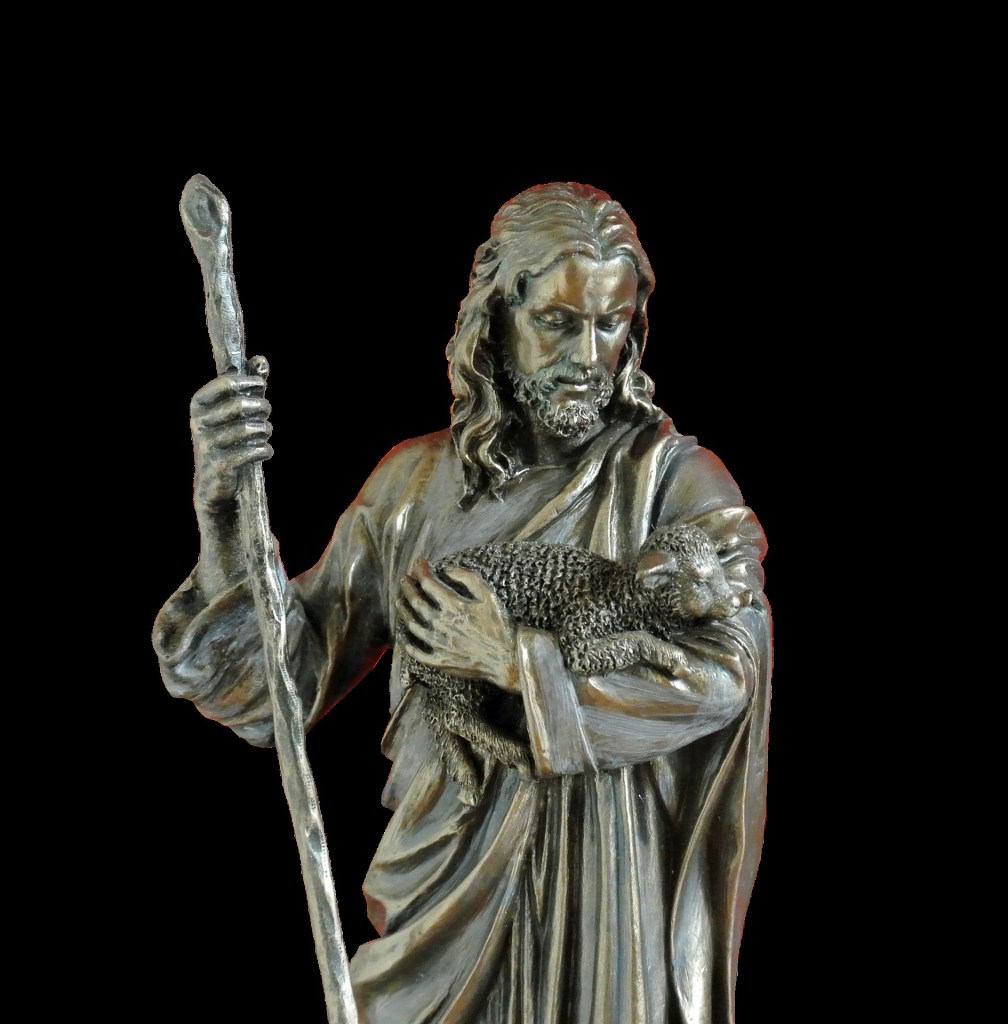
Image by Holger Grybsch from Pixabay

Hello and welcome-or welcome back-to Renaissance Woman!

As I continue my study of Isaiah 45:7, and specifically my study of the word “evil”, I wonder about the role of Satan in the existence of evil.  There are a couple of scripture passages I’ve shared before that are worth taking another look at.  The first is in Galatians 5 verses 19-21 where the Apostle Paul writes, “Now the works of the flesh are evident, which are: adultery, fornication, uncleanness, lewdness, idolatry, sorcery, hatred, contentions, jealousies, outbursts of wrath, selfish ambitions, dissensions, heresies, envy, murders, drunkenness, revelries, and the like…”  The second is Jeremiah 17:9 which says, “The heart is deceitful above all things and desperately wicked, who can know it?”  My study has made it clear to me that it is mankind and not God who is the source for those things I think of when I hear the word “evil”.

And, I say again, that “evil” isn’t the best translation for the Hebrew word ra.  Bad and calamity are better choices although my personal favorite drawn from the Strong’s concordance is “injurious to happiness”.  It is also important to remember that the Hebrew word bara, often translated as “create”, does not necessarily mean “to make something from nothing.”  My study of both the word and its usage throughout the Old Testament has caused me to settle on a definition of “to cause something new to come into being and grow towards an intended purpose”.  I can see God doing exactly this throughout the Old Testament as He deals with Israel. 

It is interesting to note that when God does bring calamity upon His people, He isn’t the source of it as in He brings something entirely new into being in order to bring about said calamity.  Two examples are when He uses nations already in existence: the Northern Kingdom being taken captive by Assyria (See 2 Kings 17) and Judah being conquered by Babylon (See 2 Kings 254 & 25).  This is fascinating to me because there is no record of Assyria being aware they were a tool used by God.  No doubt they were certain their god had triumphed over the God of Israel.  The Book of Daniel does record the fact that the Kings of Babylon were aware the God of Israel was a living God but they never did come to serve only Him.  Something else interesting to note is that fact that, while God did use these nations to bring about calamity on Israel, He also kept the promise He made to destroy them.  There is nothing but ruins to bear testament to the fact the kingdoms of Assyria and Babylon ever existed.  Truly, “the kingdom is the Lord’s and He rules over the nations” (Psalm 22:28) and that the God of Israel “makes the nations great and destroys them; He enlarges nations, and guides them” (Job 12:23).

It is clear to me those things we call “evil” are sourced in the flesh.  Our God is certainly a God who knows good and evil (See Genesis 3:22), is a present God (at hand!) and will use whatever or whoever is at hand to bring about His purpose in the microcosm of our lives and the macrocosm of the world around us.  What about Satan?  Isn’t “the devil made me do it” a viable excuse for some of the things we human beings do?  I cannot see that it is.  There are too many scriptures to list here but I encourage all of you to look up how many times the words “repay according to your deeds”, “reward according to works” or some variation of the same appears in scripture.  We human beings reap what we sow.

And yet-the Book of Revelation calls that serpent of old a great dragon “who deceives the whole world” (Rev. 12:9).  Ephesians 6:12 speaks of principalities, powers, rulers of the darkness, and spiritual hosts of wickedness in heavenly places. 1 Peter 5:8 says we have an adversary who “walks about like a roaring lion, seeking whom he may devour.”  The Bible makes it clear we have an enemy whose wiles ought to be respected-because he’s been deceiving a long time-but I can see nothing in scripture that tells me this enemy ought to be feared in any way. 

Consider Luke 10:19 where Jesus says, “Behold, I give you the authority to trample on serpents and scorpions, and over all the power of the enemy, and nothing shall by any means hurt you.”  Consider also Romans 16:20: “And the God of peace will crush Satan under your feet shortly.”  Jesus has defeated every foe, including and I should say especially Satan, and His living in me means His victory is mine.  Be afraid of a roaring lion?  What for?  Our savior is the Good Shepherd and He is the one who is able to save to the uttermost those who come to God through Him (Hebrews 7:25).

There’s a brief passage in Amos 3:12 which never ceases to fascinate me when read in the light of Hebrews 7:25.  This passage is “…as a shepherd takes from the mouth of a lion two legs or a piece of an ear…”  There’s a footnote in the Archeological Study Bible which states, “a piece of the sheep was saved to prove to the owner that it had been eaten by a wild animal, not stolen by the shepherd” (Page 1450). 

Who is our God?  Is He the one who has come to seek and to save what is lost but will settle for two legs and a piece of an ear?  Is that the story of the One who is risen from the dead and ascended to the right hand of the Father?  Would all authority in heaven and earth have been given unto Him if He’d presented pieces of His sheep and said, “I’m sorry, Father, I tried”?  Of course not!  David describes himself as a shepherd who, when a lion or bear took a lamb from the flock, he went after it and struck it, delivering the lamb from its mouth (1 Samuel 17:34-35).  We have an even greater Shepherd who returns with His lamb and says “rejoice with me for I have found my sheep which was lost!” (Luke 15:6)  He need not settle for pieces of his sheep because He is able to save to the uttermost.

I was going to call this post “Ain’t No Bite Marks on Me” because that is the truth.  I have been rescued and my wounds have been treated with oil.  My Rescuer is, was, and shall be speaking to me and I have learned to know and love the sound of His voice and another I will not follow.  My Shepherd has told me I am more than a sheep.  I am a Called-Out One.  I no longer walk in darkness but in His marvelous light.  I am a member of His body.  I am a member of His church, cleansed and sanctified by the washing of water by the word.  He presents me to Himself glorious, without spot or wrinkle.  Or bite marks.

This is my identity.  This is your identity.  We do not need to fear anything: not any evil human beings might do and not any stratagem of an already defeated enemy.  We live within the beating heart of the God who is Love.  There is no fear in His love because His love is perfect and casts out all fear.  We may find ourselves walking through the valley of the shadow of death but we need fear no evil for our God is not only with us but IN us.  We are in Christ therefore we are new creations.  The old things have passed away and Behold!, all things have become new.  We have been saved to the uttermost!

Unless noted otherwise, all Scriptures are quoted from The Holy Bible, New King James Version, Thomas Nelson Publishers, Nashville, Tennessee, 1982

References

NIV Archaeological Study Bible, Zondervan, Grand Rapids, Michigan, 2005, Page 1450

Share this:

  • Print (Opens in new window) Print
  • Tweet
  • Email a link to a friend (Opens in new window) Email
  • Share on Tumblr
Like Loading...

Safety in Numbers

30 Monday Jan 2023

Posted by Kate in Isaiah 45:7, Studies

≈ Leave a comment

Tags

Bible Study, Biblical Hebrew, Christ in Me, Christian Life, Evil, Holy Spirit, Indwelling Spirit, Isaiah 45:7, Outside the Camp, Unity

Hello and welcome-or welcome back-to Renaissance Woman!

I almost didn’t post this week.  Last week was fraught with difficulty and I wasn’t able to complete the studying I had laid out as thoroughly as I would have liked.  Perhaps I will have done by next week.  I was going to skip a week but then I came across a quote in a book by Don Keathley and, since it did relate to my current study of Isaiah 45:7, I am going to both share it and expand on it.

The quote is: “You are relieved of judging anything and anybody at any time as good or evil.  Be still and simply respond to the voice within.  Be as Jesus is only say what you hear the Father say and only do what He shows you He is doing.”1

There is such an incredible freedom in no longer eating from the Tree of the Knowledge of Good and Evil but eating from the Tree of Life that is Jesus Himself.  What liberty I have in the Spirit!  I no longer do what seems good in my own eyes nor do I determine what others do to me as good or evil.  I am learning to think in terms of “life and not-life”.  This doesn’t mean I live in some sort of imagined Holy Spirit ivory tower where, whenever evil things happen to me, I pretend they are NOT happening because “God is in His heaven and all is right with the world.”2  All due respect to Robert Browning but I don’t know of anyone who can look around right now and say a statement like that has any truth to it.  Neither was this statement true closer to home.  All is NOT right in my world.  Last week was difficult both emotionally and spiritually.  I had to deal with difficult people and I am fairly certain those same people thought it difficult to deal with me.

Why?

One answer is, while I am no longer eating from the Tree of the Knowledge of Good and Evil, many others still are.  They are both determining for themselves what is good and evil and then judging my behavior according to those standards: I am not doing what they say is “good” therefore I am evil.  Perhaps you have experienced this yourself.  And, perhaps you are like me: a people pleaser.  I don’t want people to be mad at me and neither do I want people to dislike me.  But, when I began eating from the Tree of Life and fixing my eyes solely on Jesus, this new lifestyle meant that I truly did only those things I saw the Father doing.  There is a quote I’ve seen floating around and I do not know who to attribute it to.  The quote is “It might look like I’m doing nothing but on a cellular level I’m really quite busy.”  In order to only do those things I saw the Father doing, I had to know what the Father was doing.  In order to know what the Father was doing, I had to live as a sheep that knew only my Shepherd’s voice and, in order to do that, I needed the Holy Spirit to teach me how to know that Voice in the midst of countless others.

There is an interesting piece of scripture.  It’s one tiny sentence but there is limitless treasure to be mined from it.  It’s Exodus 33:11: “So the Lord spoke to Moses face to face as a man speaks to his friend.  And he would return to the camp, but his servant Joshua the son of Nun, a young man, did not depart from the tabernacle.”  Isn’t that amazing?!  Here are two entirely different relationships two men had to the Lord.  The Lord spoke to Moses face to face, as a man speaks to his friend and that is wonderful.  Joshua however, did not depart from the tabernacle so he stayed immersed in the Lord’s presence.

I wonder how many times members of the camp grumbled against Joshua.  No doubt there was plenty to do and Moses was just one man.  And, there was no denying he was getting old and that lazy servant of his was young and able bodied but was he out helping Moses?  Noooo.  Joshua was not departing from the tabernacle and what could he possibly be doing in there that was more important than meeting the immediate needs of the camp?

It did not look like Joshua was doing very much from those outside, but on a spiritual level, both he and the Lord were very busy.  Joshua was being prepared for a unique position within the people of God and so are you and I my fellow believer.  It might not look like we’re doing very much, but on a Spiritual level, both we and the Lord are very busy.  I’ve written about it before but the Hebrew word for wait as in “wait on the Lord” (Ps. 27:14) or “they that wait upon the Lord” (Is. 40:31) is qavah (H6960) and means “to bind together”.  It might look like we are doing nothing, but this waiting on the Lord is anything but passive.

And yet, we have an adversary who “walks about like a roaring lion, seeking whom he may devour” (1 Pet. 5:8).  That Serpent of old is revealed as a dragon who “deceives the whole world” (Rev. 12:9).  How can we be certain we are not being deceived?  I encourage you to take some time and check out how many times the words “in Christ” are used in the New Testament.  We can trust that our God WANTS us to know Him and isn’t looking to pull a fast one on us.  The apostle Peter quoting Isaiah writes, “’Behold, I lay in Zion a chief cornerstone, elect, precious, and he who believes on Him will by no means be put to shame’(Is. 28:16)” (1 Peter 2:6).  We have the absolute trustworthiness of our God revealed in Jesus.  Trust in Him and we will not be put to shame.  By no means!

But still, “Satan himself transforms himself into an angel of light” (2 Corinthians 11:14) so how can we be really really sure the voice we are hearing is truly the voice of our Great Shepherd the Lord Jesus Christ?  I am not going to share the process through which I have come to know the guidance of the Holy Spirit and discern the voice of Jesus Christ and the will of the Father.  Take any ten believers and you’ll find ten different workings of the Spirit.  There are a few things I think are universal experiences though and the first is follow your peace.  The peace of Jesus Christ rules in our hearts and we can’t go wrong following our peace.  That doesn’t mean the things we are given to do are easy or even always that pleasant but 100% of the time I’ve had a deep calm peace about doing them.

This is in contrast to the uncomfortable stressed out feeling that comes directly on the heels of being shown what to do by the Spirit.  I can tell you my experience has been that the tactics of the enemy have not changed since that first “Hath God said” the Serpent uttered to Eve.  Again, 100% of the time, the call to disobedience has boiled down to “Hath God said…?” Not always in those exact words but that I have found that same hiss of the Serpent under every argument against doing what I know I see the Father doing.  There are also the guilt words, as my mother calls them, of “should”, “ought”, and “must”.  Whenever someone comes at me using those three words, I cling ever tighter to the cornerstone that is Jesus and listen for His voice.

One last thing: strong emotion does not necessarily equate to a moving of the Holy Spirit.  I was privileged to have an experience with my family in the last few weeks.  We participated in a supposedly ‘spirit-filled’ situation and there was no denying we laughed and cried.  There was overwhelming emotion and, when the experience was over, we wanted to have it all over again.  However, in the following days, I began to realize that strong emotion was all it was.  There was no answering from the Holy Spirit deep within my spirit.  I kept that realization to myself until my mother mentioned she too thought the experience was all emotion.  Does that mean it’s bad and no one should have participated?  Of course not!  I believe Romans 8:28 is true and God works in all things for the good to those who love Him.  What I am saying is test everything and just because a group of people are insisting something is Spirit-filled doesn’t mean it is.

This might mean you feel like the only person seeing something different from the rest of the group.  There is a perceived safety in numbers: if they are seeing/saying/doing it, then it must mean I am safe if I also see/say/do it.  No.  There is such freedom in Jesus Christ and the fruit of the Spirit is a very real way of life.  The joy of the Lord is alive in us through the Holy Spirit and, while it is our strength, it should not be confused with happiness.  Hebrews 13:12-13 states, “Therefore Jesus also, that He might sanctify the people with His own blood, suffered outside the gate.  Therefore let us go forth to Him, outside the camp, bearing His reproach.”

When the Spirit opens our eyes to the hope of our calling in Christ Jesus and the richness of His inheritance in us, there is no unseeing it.  We have been called out of darkness into His marvelous light and, once we taste the reality, there is no falling for the counterfeit.  It is painful to see what someone else does not see and to be written off as deceived or worse, evil.  It is sometimes lonely outside the camp because we don’t always see the others also outside the camp.

It is not possible to be alone here.  I have another quibble with the great Robert Browning.  Our God is only in His heaven in the sense that “He is before all things and in Him all things consist” (Colossians 1:17).  I came across an exhilarating passage while conducting my study on “evil” and it’s found in Jeremiah 23:23-24: “’Am I a God near at hand,’ says the Lord, ‘and not a God afar off? Can anyone hide himself in secret places so I shall not see him?’ says the Lord; ‘Do I not fill heaven and earth?’ says the Lord.”

Our safety is not in what a great number of people believe is true, our safety is Jesus Himself.  He is at hand.  He is not up or over or afar off.  It is true that he is before us and around us and behind us and with us.  Best of all, He is IN us.  Do not be deceived away from this great truth: the being of God cannot be separated and so, because the Holy Spirit lives in us, so does the Lord Jesus Christ.  Because He is in the Father and the Father in Him, the Father is also in us.  We can know and do only what the Father is doing.  Oftentimes, what the Father is doing is not at all what others would have us do. Don’t worry if your holding fast to the cornerstone does require you coming outside the camp.  I’ll see you here.

Unless noted otherwise, all Scriptures are quoted from The Holy Bible, New King James Version, Thomas Nelson Publishers, Nashville, Tennessee, 1982

  1.  Keathley, Don, Hell’s Illusion: Exposing the Myth of Hell, 2022
  2. 718. Pippa’s Song. Robert Browning. The Oxford Book of English Verse (bartleby.com)

Share this:

  • Print (Opens in new window) Print
  • Tweet
  • Email a link to a friend (Opens in new window) Email
  • Share on Tumblr
Like Loading...

The Life in Us

23 Monday Jan 2023

Posted by Kate in Isaiah 45:7, Studies

≈ Leave a comment

Tags

Bible Reading, Bible Study, Bible Translations, Christ in Me, Christ Life, Christian Life, Evil, Holy Spirit, Indwelling Spirit

Hello!  Welcome to a new week and a new post on Renaissance Woman.

One day last week, I perchanced to listen to a bit of a conversation on Bible translations.  The two participants were talking about the dangers of reading translations done by just one person as opposed to other translations; ones that actually lived up to the word “translation” (as opposed to being called a “paraphrase”) because they were made by committees of scholars. One of the participants inferred bibles translated by a committee of scholars are more trustworthy than those translated by a single person but I don’t necessarily agree.  I have found translators have an incredibly difficult time not translating the Bible according to what they think it ought to say rather than sticking to the meanings found in the original languages.

One such case in point is the NIV translation of the Bible.  This is a popular translation.  According to Amazon.com, since its publication in 1973; the NIV has sold 16o million copies1.  I own a copy myself: a NIV Journal Bible because I find the columns an invaluable space to note the Greek words that have been translated by different English words: sometimes in the same sentence.  Despite the NIV being translated by a committee of scholars and despite some key changes made in the 2011 update, given the choice, it is not a translation I would trust to be the only one I read.

But then, no translation is perfect.  I have already pointed out how the translators of the King James Version were bothered by the word Elohim in Psalm 8:5 and chose to render it as “angels” rather than “God” despite there being the Hebrew malak translated angel or angels in numerous other passages.  And yet, the KJV does translate Galatians 2:20 as “…the life I now live in the flesh I live by the faith of the Son of God” rather than “”the life which I now live in the flesh I live by faith in the Son of God” which is how the NKJV as well as many other translations renders it.  It’s a small change-“of” to “in”-but it shifts the meaning and focus from His faith in us as our strength to live our lives to our having to have faith in Him.    

Despite the inaccuracies and inconsistencies of the various translations, I love reading my Bible.  I enjoy reading it in different translations because the rhythms resulting from the different word choices help me to look at passages in a different way.  I honor my brothers and sisters who risk their lives by merely possessing a Bible and I am grateful I live in a country where I can possess as many copies in as many translations as I like.  It is a privilege I never take for granted.  I do have a favorite translation which I read the most because the language suits me.  I think the best translation of the Bible for everyone is the one that suits that person.  For example, the Action Bible does not appeal to me in any way.  However, I recently read an article that said the Action Bible is the version that is appealing to new believers in various regions of Africa.  Just because it is not a version I care to read does not mean it is not a version the Holy Spirit would use to open others’ eyes to the truth of Jesus Christ.  Who am I then to say what is good or evil?

Bible reading and the disagreements over translations have been weighing on my mind as I’ve conducted my study on evil.  Just reading a translation, any translation, does not give a complete nor accurate picture of the meaning of evil.  For example, let’s compare the Strong’s Concordance list of scriptures containing the word “evil” in the books of Matthew and Romans.  There are 19 occurrences in the Book of Matthew.  In all but three, “evil” is used to translate the Greek word poneros (G4190). Two exceptions are Matthew 24:48 and 27:23 where the Greek word is kakos (G2556) and the third is Matthew 6:34 where “evil” is used to translate kakia (G2549). The opposite is true in the Book of Romans.  There are 17 occurrences in Romans and all but two are translations of kakos.  Romans 14:16 does not have a reference number next to it in the Strong’s.  The passage is “Then do not let your good be spoken evil of” and the word “evil” is supplied by the translators as they sought to make the meaning of blasphameo (G987) clear.  The other exception is Romans 12:9 where we are to “abhor what is evil” and the Greek word there is poneros.  We can glean a bit of the differences of meaning through a careful reading of the context of these scriptures but we cannot help but bring our own definition of “evil” to these passages.  The words in the Greek mean very different things and I am convinced something is lost with a mere reliance on an English translation.

Poneros means “hurtful, bad, evil, grievous, lewd, malicious, wicked” and derives from ponos which means “toil”.  It is a word that relates to effects rather than character and is the word translated “evil” in the scriptures describing deeds and works as well as the heart and eye (See Matt 9:4, 12:34, 15:19, 20:15, John 3:19, 7:7).  It is also the Greek word found in the scriptures describing “evil spirits” and the “evil one” (See Mat. 5:37, 6:13, Luke 7:21, Luke 8:2, Luke 11:4, John 17:5, Acts 19:12).  Kakos is a primary word and means “worthless, bad, evil, harm, ill, noisome, wicked” and-despite the definition-is not interchangeable with poneros in that kakos is intrinsic meaning the “badness” or “evil” belongs naturally to the subject being referred to. Kakos relates to character.  This fascinated me because I would have expected kakos to be the word describing both evil spirits and the evil one and it is not.  I need to take a much longer and deeper look at why this is so.

Just to be thorough, the Greek word kakia is the noun while kakos is the adjective.  The words do not carry different meanings.  

One more example because it makes me shake my head in wonder: “evil” appears three times in Titus and each time it translates a different Greek word.  The passages are Titus 1:12, 2:8, and 3:2. The phrase in Titus 1:12 is “evil beasts” and the Greek word is kakos.  Titus 2:8 says “…having nothing evil to say of you” and Titus 3:2 says “speak evil”.  The Greek words are phaulos (G5337) and blasphemeo, respectively.  I include this because I would not necessarily think the words all translated by “evil” had different meanings in the Greek based on context.  The Strong’s Concordance is, of course, based off of the King James Version.  Different translations have sometimes chosen to use different words in the passages I’ve listed but then they too end up having their own inaccuracies.  Again, no translation is perfect.

Paul says two things to Timothy which will bring me to my material point.  The first is in 2 Timothy 2:15 where Paul says, “Be diligent to present yourself approved to God, a worker who does not need to be ashamed, rightly dividing the word of truth” and, as I have heard that used to stress the importance of studying the Bible, I include it here.  The second is 2 Timothy 3:16 where Paul says, “All scripture is given by inspiration of God, and is profitable for doctrine, for reproof, for correction, for instruction in righteousness.”  The NIV (ha!) but also the ESV as well as other translations have “god-breathed” instead of inspiration. 

I don’t disagree.  As I said, I love reading my Bible.  I do so for enjoyment and I can’t put into words how my knowledge of the Lord has grown through studying the Bible.  Looking beyond the language of my translations into the Hebrew, Greek, and even Aramaic is also invaluable to my increasing knowledge.  But, I do not consider my reading and study a substitute for knowing God, personally and intimately.  Paul also wrote, “our sufficiency is from God who also made us sufficient as ministers of the new covenant, not of the letter but of the Spirit; for the letter kills but the Spirit gives life” (2 Corinthians 3:5.-6).  The Spirit gives life.  I cannot say that too many times.

In recent days, the social media algorithms have sent me various posts which all have contained the same message: the number one way to grow closer to God is to read your Bible.  That is not true. You can definitely come to know about God by reading your Bible but; to know Him, which in the original languages carry the intent of the same level of intimacy as the marriage relationship, is only possible in the Holy Spirit.   It is the Spirit alone who ministers life-the very life of Jesus Christ-to us by dwelling in us.  My Bible Teacher recently pointed out the Persons of God are Father, Son, and Holy Spirit, not Father, Son, and Holy Scripture.  I am concerned that all I hear is a stressing of first and foremost reading the Bible.  The Holy Spirit is not mentioned.  Ever.

Do not allow yourself to be kept from living to the fullest the life of Christ Jesus which is yours now through the Holy Spirit.  The same Spirit who inspired the writers of the Bible lives in you.  So read your Bible in whatever translation you choose but take the time to close your Bible.  Ask the Holy Spirit to teach you the truth of you in Christ and Christ in you. If you do not know your body is the temple of the Holy Spirit right now, ask Him to open your eyes to this reality.  Do not settle for knowing about our God, but KNOW HIM!

May the Spirit of wisdom and revelation open the eyes of all our hearts.

Amen.

Unless noted otherwise, all Scriptures are quoted from The Holy Bible, New King James Version, Thomas Nelson Publishers, Nashville, Tennessee, 1982

1. NIV/The Message Parallel Bible (New International Version): Zondervan: 9780310928898: Amazon.com: Books

References

The New Testament in Four Versions, Christianity Today Edition, Washington, D.C. 1965

Strong, James, LL.D., S.T.D., The New Strong’s Exhaustive Concordance of the Bible, Thomas Nelson Publishers, Nashville, Tennessee, 1990

Interesting Reading

Where Did the NIV Come From? | The Story of the NIV (thenivbible.com)

NIV changes “sinful nature” to “flesh” | Freedom In Christ Ministries (ficm.org.uk)

The Men Who Wrote Scripture Were Led by the Spirit – BJU Seminary

Share this:

  • Print (Opens in new window) Print
  • Tweet
  • Email a link to a friend (Opens in new window) Email
  • Share on Tumblr
Like Loading...

It’s A Heart Thing-Part Two

16 Monday Jan 2023

Posted by Kate in Isaiah 45:7, Studies

≈ Leave a comment

Tags

Bible Study, Book of Isaiah, Christ in Me, Clean Heart, Evil, Heart of Flesh, Heart of the Father, Holy Spirit, Indwelling Spirit, Isaiah 45:7, New Heart, Will of God

Image by StockSnap from Pixabay

Hello and welcome to Renaissance Woman!

This week I am continuing my study of Isiah 45:7 and am still looking at the words of the Lord: “I create evil.”  If you read last week’s post, you will see the record in scripture is clear: God knows evil, God uses evil, and God turns away from the evil He has determined to do.  What I do not see recorded in scripture is God is the source of evil. 

I think it’s important to review-just in case anyone reading this has the same reaction I do when hearing “evil”-is that what the scriptures are intending to convey don’t always align with what we think when we read a word.  Those things I think of when I hear the word “evil” are comprehensively listed in Galatians 5 verses 19-21: adultery, fornication, uncleanness, lewdness, idolatry, sorcery, hatred, contentions, jealousies, outbursts of wrath, selfish ambitions, dissensions, heresies, envy, murders, drunkenness, revelries.  These the Apostle Paul calls “the works of the flesh” and God is not the source of any of these things.  These are the things that originate out of the human heart and mind. 

None of the passages describing the evil that God does are referencing any of these things.  In this sense “evil” is not a great translation for the Hebrew word ra.  I don’t find “bad” any better of a choice because I find I still have a knee-jerk reaction at the thought of God doing bad things.  There are some translations that have chosen “calamity” but the translators aren’t consistent. For the sake of clarity in this post, and because “evil” and “bad” carry a mental connotation I have not quite rid myself of, I will use the term “injurious to happiness” when describing the actions of God.

I cannot deny, and I don’t think any believer will disagree; God does do things that are injurious to our happiness.  We expect Him to do so because we know that we are sons of God and that “whom the Lord loves He chastens, and scourges every son whom He receives” (Hebrews 12:6-7).  Chastening and scourging never feel good but we submit to their processing because we know that the end result will be us fashioned into the image of the Lord Jesus Christ.  What is injurious to our happiness in the present moment is meant to bring us to a glorious result and we rest in the fact that “all things work together for good to those who love God, to those who are the called according to His purpose” (Romans 8:28). 

As I read through the scriptures in the Old Testament containing ra (evil), I saw that the injurious to happiness acts of God were always in response to the actions arising out of the hearts of humankind.  I quoted Jeremiah 17:9 in a previous post: “The heart is deceitful above all things, and desperately wicked; who can know it?”  This is not a rhetorical question nor does it go unanswered.  Verse 10 says, “I, the Lord, search the heart, I test the mind, even to give every man according to his ways, according to the fruit of his doings.”  

This promise is echoed in other scriptures:

Deuteronomy 32:35: “Vengeance is Mine and recompense; their foot shall slip in due time; for the day of their calamity is at hand, and the things to come hasten upon them.”

2 Chronicles 16:9: “For the eyes of the Lord run to and fro throughout the whole earth to show Himself strong on behalf of those whose heart is loyal to Him.”

Proverbs 15:3: “The eyes of the Lord are in every place, keeping watch on the evil and the good.”

Isaiah 13:11: “I will punish the world for its evil and the wicked for their iniquity; I will halt the arrogance of the proud, and will lay low the haughtiness of the terrible.”

These passages are echoed in the New Testament as well.  Jesus Himself says, “Woe to the world because of offences!  For offenses must come, but woe to that man by whom the offense comes!” and Paul consoles the church at Thessalonica saying, “it is a righteous thing with God to repay with tribulation those who trouble you” (2 Thes. 1:6).  With all these passages in mind, I can obey the admonition in Proverbs 20:22: “Do not say “I will recompense evil’; Wait for the Lord and He will save you.”

My first instinct when someone injures me is “how dare he/she/they?” and to retaliate.  However, because of the promises of God that He will indeed repay everyone according to their deeds, I can put that person in the hands of God and trust that He will indeed repay them.

But there’s a problem.  I’ve already quoted scriptures in Jeremiah where God promises to change his mind and turn away from the injurious acts He has determined to do if the person or people will turn their hearts to Him.  I also find these passages in the Bible:

Proverbs 16:4: “The Lord has made all for Himself, Yes, even the wicked for the day of doom.”

Ezekiel 33:11 “Say to them: ‘As I live’, says the Lord God, ‘I have no pleasure in the death of the wicked, but that the wicked turn from his way and live’.”

In the New Testament, Peter writes, ““the Lord is not slack concerning His promise, as some count slackness, but is longsuffering toward us, not willing that any should perish but that all should come to repentance” (2 Peter 3:9).

I am reminded of the story of Jonah.  God wished to send him to the people of Nineveh to issue a warning to turn from their wicked ways and turn their hearts toward God.  Jonah eventually does so but he has no expectation his warning will be heeded and goes up onto a hilltop in order to better see the destruction God is about to rain down on the people.  The people do heed the warning, they do turn their hearts, and there is no destruction.  Is Jonah thrilled?  No.  In fact, he is angry at God.  Despite being a prophet of the Lord, he did not share God’s heart for the people.

How often have I not shared in God’s heart?  How often has my desire been for the ground to open up and swallow my enemies or at least a little fire and brimstone and not “Father, forgive them for they know not what they do?”     

There is a passage in his epistle to the Romans where Paul instructs us to: “Bless those who persecute you; bless and do not curse.  Rejoice with those who rejoice and weep with those who weep.  Be of the same mind toward one another.  Do not set our mind on high things, but associate with the humble.  Do not be wise in your own opinion.  Repay no one evil for evil.  Have regard for good things in the sight of all men.  If it is possible, as much as depends on you, live peaceably with all men.  Beloved, do not avenge yourselves, but rather give place to wrath; for it is written, “Vengeance is Mine, I will repay,” says the Lord.  Therefore “If you enemy is hungry, feed him; If he is thirsty, give him a drink; For in so doing you will heap coals of fire on his head” (Proverbs 25:21-22) Do not be overcome by evil, but overcome evil with good” (Romans 12: 14-21).

Everything in this passage is possible to do while continuing to carry resentment and the desire for revenge in my heart.  I can, through will power, put on a good show, so to speak.  It is not possible to genuinely live out everything in this passage without the life of Jesus Christ made a reality in me by the Holy Spirit.  My cry is that of David: “Create in me a clean heart, O God, and renew a steadfast spirit within me.”  This cry is perfectly answered by God in the prophecies found in Jeremiah 32: 40-41 and Ezekiel 36: 25-27.  These prophecies are made a reality in this day we live in.  What is impossible with man is possible with the Father through the finished work of Jesus Christ and the ministry of the Holy Spirit.

Our new heart is already a reality.  It is the gift of God. Jesus has already come to this world, lived as one of us, been crucified, risen from the dead, ascended to the Father, and sent the Spirit.  The Spirit has been lavishly poured out into our hearts declaring to us who we really are in Jesus Christ and teaching us how to live out of this new heart.  We are new creations in Christ Jesus and the new heart that has been put in us is His heart.  We are, in this very moment, partakers of His divine nature.

We human beings are truly beautiful.  God Himself called us good when He made us.  We are capable of doing such great things.  We are not stupid.  We know both good and evil and we exercise our power of self-will every day.  We oftentimes do good to our fellow beings even when everything in us doesn’t want to do it.  We can, and often do, act in direct opposition to our feelings.  This is not enough for me.  I can do all the good that is in my power to do and still be aware of how far I fall short.  The word of God stands firm: “Now this I say brethren, that flesh and blood cannot inherit the kingdom of God; nor does corruption inherit incorruption” (1 Corinthians 15:50).  There is no amount of preparation I can do on my own heart.  All I can do is respond to the truth as the Holy Spirit opens my eyes.  This is the truth: I have been crucified with Christ.  I am dead to sin and to my old way of life.  I am alive to Jesus Christ.  It is no longer I who live but Christ who lives in me.

Living out of this new heart is not instantaneous.  My flesh still carries the memory of how I used to think and act.  But now, whenever that memory tries to assert itself, I tell it no, there is a new heart and new law at work now, and I make the deliberate decision to, as Paul says, “by the mercies of God…present your bodies a living sacrifice, holy, acceptable to God, which is your reasonable service.  And do not be conformed to this world, but be transformed by the renewing of your mind, that you may prove what is that good and acceptable and perfect will of God” (Romans 12:1:2).

Not by might, nor by power, but by Your Spirit.

Amen.

Unless noted otherwise, all Scriptures are quoted from The Holy Bible, New King James Version, Thomas Nelson Publishers, Nashville, Tennessee, 1982

Share this:

  • Print (Opens in new window) Print
  • Tweet
  • Email a link to a friend (Opens in new window) Email
  • Share on Tumblr
Like Loading...
← Older posts
Newer posts →

Categories

Featured Posts

Isaiah 45:7

When Tradition and I Part Ways

Keep reading
Kate's avatar by Kate November 28, 2022April 28, 2024
Gospel and Letters of John

A New Heart

Keep reading
Kate's avatar by Kate December 7, 2020March 14, 2021
Studies

The Way He Has Made

Keep reading
Kate's avatar by Kate August 7, 2023August 6, 2023

Enter your email address to subscribe to this blog and receive notifications of new posts by email.

Join 210 other subscribers
Follow Renaissance Woman on WordPress.com

Follow Me on Facebook

Follow Me on Facebook

Meta

  • Create account
  • Log in
  • Entries feed
  • Comments feed
  • WordPress.com

Blog at WordPress.com.

  • Subscribe Subscribed
    • Renaissance Woman
    • Join 169 other subscribers
    • Already have a WordPress.com account? Log in now.
    • Renaissance Woman
    • Subscribe Subscribed
    • Sign up
    • Log in
    • Report this content
    • View site in Reader
    • Manage subscriptions
    • Collapse this bar
 

Loading Comments...
 

You must be logged in to post a comment.

    %d